Blog

  • Be on the Same Wavelength


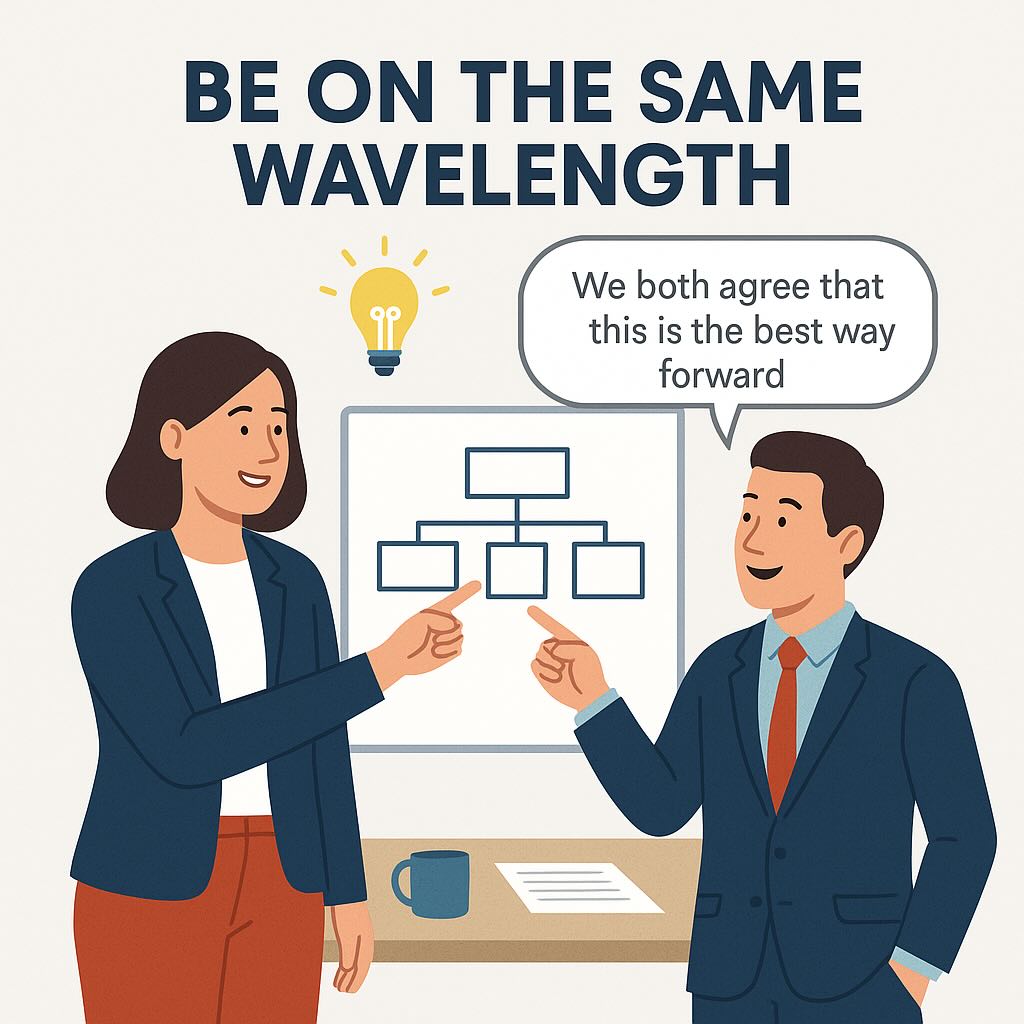
    Be on the same wavelength meaning

    🗓️ Idiom: Be on the Same Wavelength (v)


    💬 Meaning

    • To share similar thoughts, opinions, or ways of thinking.
    • To easily understand and communicate with each other.

    🧠 Example Sentences

    • During the presentation, it was clear the two co-presenters were on the same wavelength.
    • The manager and assistant were on the same wavelength, which made communication seamless.
    • It’s easier to collaborate when your team is on the same wavelength.

    🏛️ Origin

    This idiom comes from radio technology in the early 20th century. Radios work by tuning to the same wavelength to receive a clear signal. The phrase later became a metaphor for people who understand each other well.


    📝 Practice Exercises

    1. Fill in the blank:

    The meeting went smoothly because everyone was __________ about the goals.

    Answer

    on the same wavelength

    2. Choose the correct meaning of “be on the same wavelength”:

    A) To think alike and understand each other easily
    B) To use the same internet connection
    C) To agree to disagree

    Answer

    A) To think alike and understand each other easily

    3. Rewrite the sentence using “Be on the same wavelength”:

    “We worked well together because we had the same ideas and communication style.”

    Answer

    We worked well together because we were on the same wavelength.


    ℹ️ Other Useful Pages


    📚 Learning Resources

    👉 Main Idioms Page
    👉 Idioms for Communication

    👥 Support Spaces

    👉 Student Space
    👉 Tutor Toolkit
    ⭐️ Extras

    📫 Get a Daily Idiom


  • Speak the Same Language


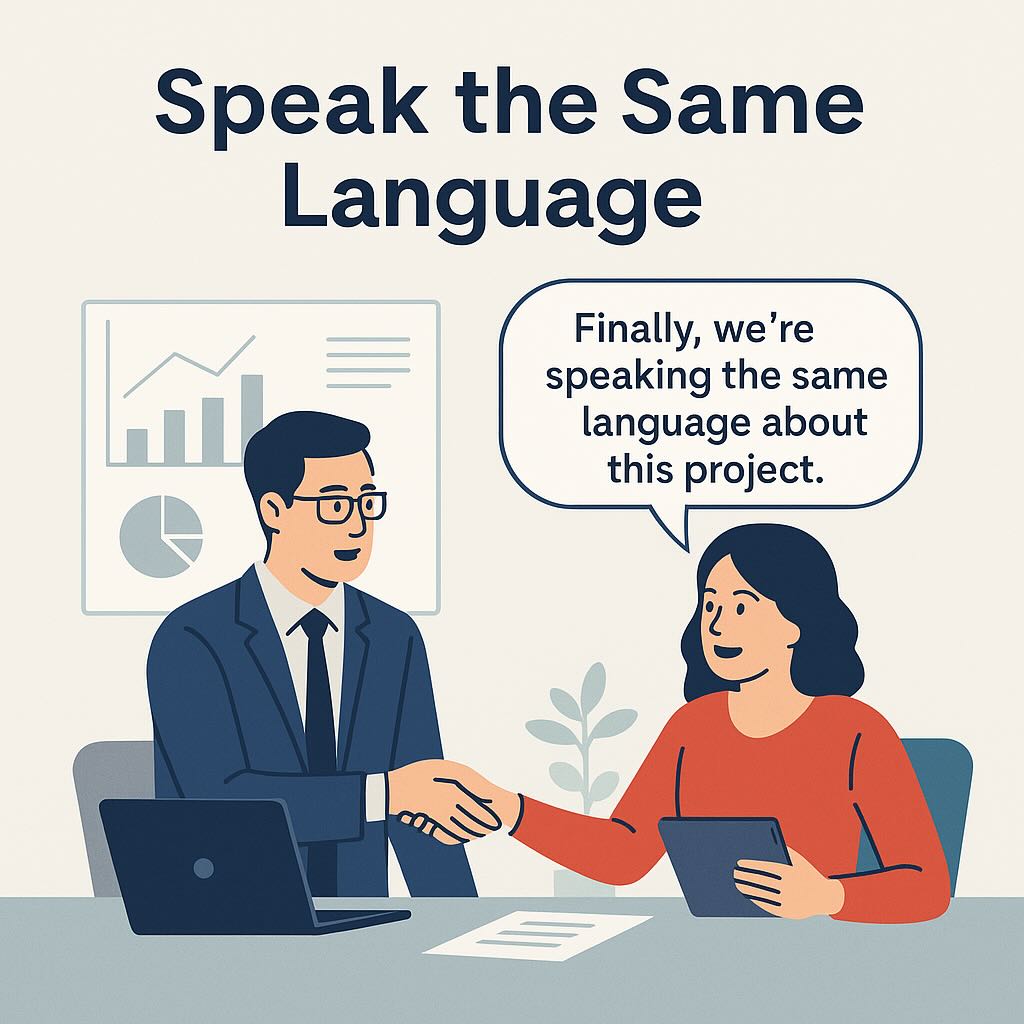
    Speak the same language meaning

    🗓️ Idiom: Speak the Same Language (v)


    💬 Meaning

    • To understand each other easily because of shared ideas, values, or communication styles.
    • To be in agreement or have mutual understanding in discussions or work.

    🧠 Example Sentences

    • The marketing and design teams finally started speaking the same language after the kickoff meeting.
    • When working with international clients, it’s important to ensure you’re speaking the same language— literally and figuratively.
    • The project went smoothly because the client and consultant spoke the same language from the beginning.

    🏛️ Origin

    To speak the same language comes from the use of “language” to mean shared understanding. It became popular in the 20th century to describe people or groups with similar views or goals.


    📝 Practice Exercises

    1. Fill in the blank:

    We made fast progress because we were able to __________ from the start.

    Answer

    speak the same language

    2. Choose the correct meaning of “speak the same language”:

    A) To use identical words
    B) To share a common understanding or communication style
    C) To translate a sentence

    Answer

    B) To share a common understanding or communication style

    3. Rewrite the sentence using “speak the same language”:

    “They understood each other easily because they had similar ideas and goals.”

    Answer

    They understood each other easily because they spoke the same language.


    📚 Learning Resources

    👉 Main Idioms Page
    👉 Idioms for Communication

    👥 Support Spaces

    👉 Student Space
    👉 Tutor Toolkit
    ⭐️ Extras

    📫 Get a Daily Idiom


  • Read the Room


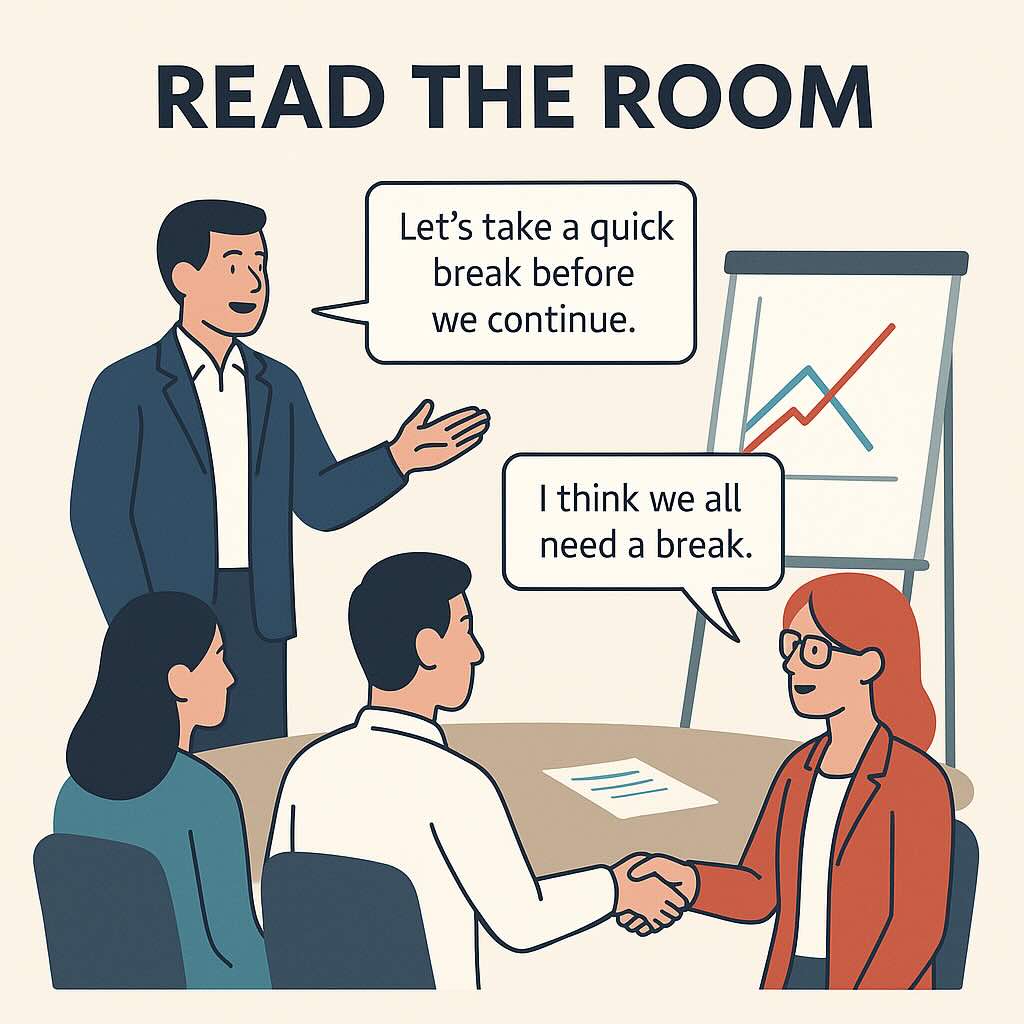
    Read the Room Meaning

    🗓️ Idiom: Read the Room (v)


    💬 Meaning

    • To understand the mood, feelings, or atmosphere of a group of people.
    • To adjust your behavior or message based on how others are reacting.

    🧠 Example Sentences

    • Before making that joke, you should have read the room. It clearly didn’t land well.
    • She’s excellent at reading the room during meetings and tailoring her message accordingly.
    • If you want to persuade the board, you’ll need to read the room and speak their language.

    🏛️ Origin

    The idiom comes from the idea of “reading” a situation. In this case, the “room” means the people present and their emotions. It has been widely used since the late 20th century in business and social settings.


    📝 Practice Exercises

    1. Fill in the blank:

    He told a joke during the serious discussion, clearly failing to __________.

    Answer

    read the room

    2. Choose the correct meaning of “read the room”:

    A) To prepare the agenda
    B) To interpret the group’s mood and adjust your behavior
    C) To take notes during a meeting

    Answer

    B) To interpret the group’s mood and adjust your behavior

    3. Rewrite the sentence using “read the room”:

    “She understood the serious tone of the meeting and decided to not make a joke.”

    Answer

    She read the room and decided to not make a joke.


    ℹ️ Other Useful Pages


    📚 Learning Resources

    👉 Main Idioms Page
    👉 Idioms for Communication

    👥 Support Spaces

    👉 Student Space
    👉 Tutor Toolkit
    ⭐️ Extras

    📫 Get a Daily Idiom


  • Put Your Foot in Your Mouth


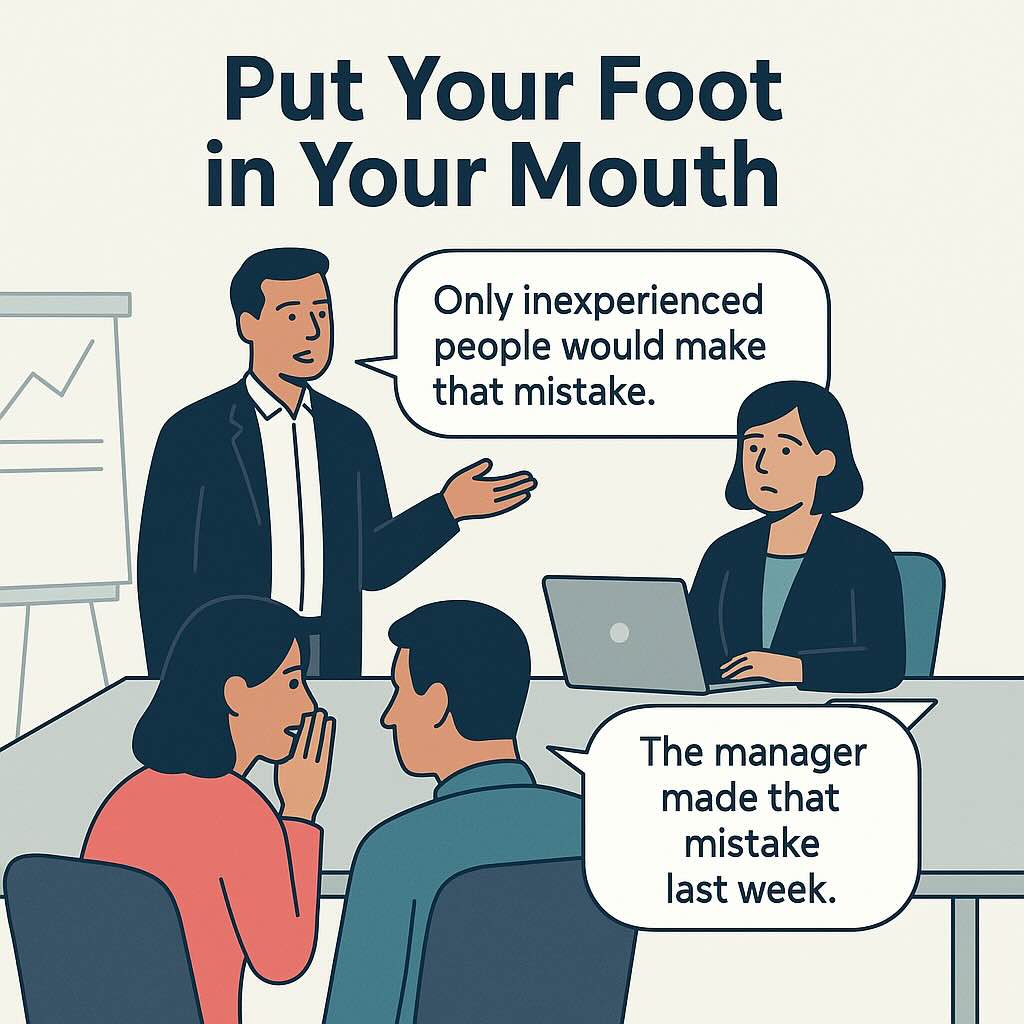
    Put your foot in your mouth meaning

    🗓️ Idiom: Put Your Foot in Your Mouth (verb phrase)


    💬 Meaning

    • To say something embarrassing or inappropriate.
    • To make a comment that causes awkwardness or offense.

    🧠 Example Sentences

    • He really put his foot in his mouth when he mentioned the surprise party.
    • She put her foot in her mouth during the meeting and upset the client.
    • I put my foot in my mouth by asking about her private matters.

    🏛️ Origin

    The phrase dates back to the early 20th century and comes from the idea of doing something clumsy or awkward, like physically putting a foot in your mouth. It evolved to describe saying something embarrassing or inappropriate.


    📝 Practice Exercises

    1. Fill in the blank:
    “During the presentation, he accidentally __________ his foot in his mouth.”

    Answer

    put

    2. Multiple choice:
    What does “put your foot in your mouth” mean?
    a) To trip while walking
    b) To say something embarrassing or inappropriate
    c) To speak very politely

    Answer

    b) To say something embarrassing or inappropriate

    3. Change the sentence using “put your foot in your mouth”:
    She accidentally said something that embarrassed everyone at the party.

    Answer

    She put her foot in her mouth at the party.


    ℹ️ Other Useful Pages


    📚 Learning Resources

    👉 Main Idioms Page
    👉 Idioms for Communication

    👥 Support Spaces

    👉 Student Space
    👉 Tutor Toolkit

    ⭐️ Extras

    📫 Get a Daily Idiom


  • Talk at Cross Purposes


    Talk at Cross Purpose Meaning

    🗓️ Idiom: Talk at Cross Purposes (verb phrase)


    💬 Meaning

    • To misunderstand each other while talking.
    • To talk about different things without realizing it.

    🧠 Example Sentences

    • We were talking at cross purposes and didn’t realize it until later.
    • The manager and the client were talking at cross purposes during the call.
    • Make sure everyone is on the same page, so we don’t talk at cross purposes.

    🏛️ Origin

    The phrase comes from 16th-century English, where “cross purposes” meant opposing intentions. By the 19th century, it was used to describe conversations where people misunderstand each other and talk about different things.


    📝 Practice Exercises

    1. Fill in the blank:
    “They were __________ at cross purposes and missed the main point.”

    Answer

    talking

    2. Multiple choice:
    What does “talk at cross purposes” mean?
    a) To have a clear, direct conversation
    b) To misunderstand each other while talking
    c) To speak in a foreign language

    Answer

    b) To misunderstand each other while talking

    3. Change the sentence using “talk at cross purposes”:
    During the meeting, they were talking about different subjects without realising it.

    Answer

    During the meeting, they were talking at cross purposes.


    ℹ️ Other Useful Pages


    📚 Learning Resources

    👉 Main Idioms Page
    👉 Idioms for Communication

    👥 Support Spaces

    👉 Student Space
    👉 Tutor Toolkit

    ⭐️ Extras

    📫 Get a Daily Idiom


  • Cut to the Chase


    Cut to the Chase Meaning

    🗓️ Idiom: Cut to the Chase (verb phrase)


    💬 Meaning

    • To skip small details and focus on the main point.
    • To speak directly about what is important.

    🧠 Example Sentences

    • Let’s cut to the chase and talk about the contract terms.
    • She cut to the chase and explained the key problem.
    • The presentation was long, but finally he cut to the chase.

    🏛️ Origin

    This idiom comes from early Hollywood silent films. Chase scenes were the most exciting part, so filmmakers used “cut to the chase” as a way of saying skip the boring parts and go straight to the action. It later became common in everyday conversation for getting directly to the point.


    📝 Practice Exercises

    1. Fill in the blank:
    “Instead of talking about background details, let’s __________ to the chase.”

    Answer

    cut

    2. Multiple choice:
    What does “cut to the chase” mean?
    a) To start running in a movie scene
    b) To move directly to the important part
    c) To avoid making a decision

    Answer

    b) To move directly to the important part

    3. Change the sentence using “cut to the chase”:
    She quickly explained the most important point of the discussion.

    Answer

    She quickly cut to the chase.


    ℹ️ Other Useful Pages


    📚 Learning Resources

    👉 Main Idioms Page
    👉 Idioms for Communication

    👥 Support Spaces

    👉 Student Space
    👉 Tutor Toolkit
    ⭐️ Extras

    📫 Get a Daily Idiom


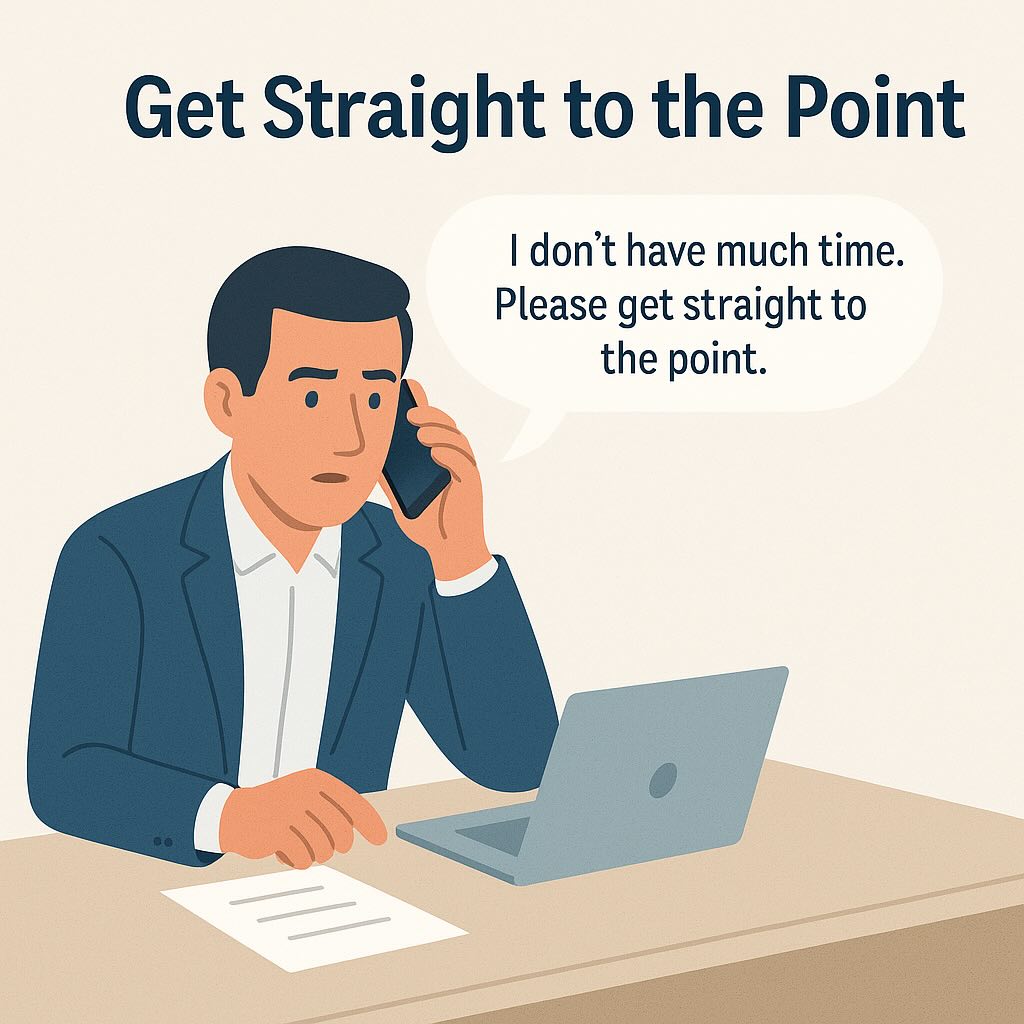
  • Get Straight to the Point


    Get Straight to the Point meaning

    🗓️ Idiom: Get Straight to the Point (v)


    💬 Meaning

    • To talk directly about the main subject.
    • To avoid unnecessary details or delay.

    🧠 Example Sentences

    • Let’s get straight to the point and discuss the budget.
    • She got straight to the point and explained the problem.
    • We do not have much time, so please get straight to the point.

    🏛️ Origin

    This phrase comes from the idea of “the point” being the sharp or most important part. In conversation, it means focusing directly on the central issue without distraction.


    📝 Practice Exercises

    1. Fill in the blank:
    “Let’s __________ straight to the point and talk about next year’s goals.”

    Answer

    get

    2. Multiple choice:
    What does “get straight to the point” mean?
    a) To begin speaking about the main topic directly
    b) To move physically toward a sharp object
    c) To avoid saying what you really mean

    Answer

    a) To begin speaking about the main topic directly

    3. Change the sentence using “get straight to the point”:
    He explained the main issue without wasting time.

    Answer

    He got straight to the point.


    ℹ️ Other Useful Pages


    📚 Learning Resources

    👉 Main Idioms Page
    👉 Idioms for Communication

    👥 Support Spaces

    👉 Student Space
    👉 Tutor Toolkit

    ⭐️ Extras

    📫 Get a Daily Idiom


  • Beat Around the Bush


    Beat Around the Bush meaning

    🗓️ Idiom: Beat Around the Bush (v)


    💬 Meaning

    • To avoid talking directly about a subject.
    • To delay or avoid giving a clear answer.

    🧠 Example Sentences

    • Stop beating around the bush and tell me what you really think.
    • The manager beat around the bush instead of answering the question directly.
    • We do not have much time, so let’s not beat around the bush.

    🏛️ Origin

    This idiom comes from medieval hunting in England. Hunters would beat bushes to scare birds into the open, while others caught them. The action of not going directly to the target became a metaphor for avoiding the main point in conversation.


    📝 Practice Exercises

    1. Fill in the blank:
    “Please do not __________ around the bush. Just give me a clear answer.”

    Answer

    beat

    2. Multiple choice:
    What does “beat around the bush” mean?
    a) To hunt for birds in the forest
    b) To avoid speaking directly about something
    c) To quickly explain the main point

    Answer

    b) To avoid speaking directly about something

    3. Change the sentence using “beat around the bush”:
    He avoided giving a direct answer during the meeting.

    Answer

    He beat around the bush during the meeting.


    ℹ️ Other Useful Pages


    📚 Learning Resources

    👉 Main Idioms Page
    👉 Idioms for Communication

    👥 Support Spaces

    👉 Student Space
    👉 Tutor Toolkit

    ⭐️ Extras

    📫 Get a Daily Idiom


  • Hear it Through the Grapevine


    hear it through the grapevine meaning – illustration showing office colleagues gossiping at the water cooler

    🗓️ Idiom: Hear It Through the Grapevine (v)


    💬 Meaning

    • To learn news or information informally, often by gossip.
    • To hear something from other people, not directly from the main source.

    🧠 Example Sentences

    • I heard through the grapevine that the company is planning a merger.
    • She heard through the grapevine that her colleague was leaving.
    • We heard through the grapevine about the changes before management told us.

    🏛️ Origin

    This idiom comes from the 19th century in the United States, where the telegraph system was sometimes called the “grapevine telegraph” because the wires looked like vines. People also used “grapevine” for informal communication, and it became linked with hearing rumors.


    📝 Practice Exercises

    1. Fill in the blank:
    “I __________ through the grapevine that our office might be moving to a new building.”

    Answer

    heard it

    2. Multiple choice:
    What does “hear it through the grapevine” mean?
    a) To listen to music at a vineyard
    b) To hear news from unofficial or informal sources
    c) To read official company announcements

    Answer

    b) To hear news from unofficial or informal sources

    3. Change the sentence using “hear it through the grapevine”:
    I found out informally that our manager is getting promoted.

    Answer

    I heard it through the grapevine that our manager is getting promoted.


    ℹ️ Other Useful Pages


    📚 Learning Resources

    👉 Main Idioms Page
    👉 Idioms for Communication

    👥 Support Spaces

    👉 Student Space
    👉 Tutor Toolkit

    ⭐️ Extras

    📫 Get a Daily Idiom


  • Keep Someone in the Loop


    Work email update being sent to keep team members in the loop.

    🗓️ Idiom: Keep Someone in the Loop (v)


    💬 Meaning

    • To include someone in communication or updates.
    • To make sure someone has the latest information.

    🧠 Example Sentences

    • Please keep me in the loop about any changes to the schedule.
    • The manager kept the whole team in the loop during the negotiations.
    • It is important to keep clients in the loop so they feel informed.

    🏛️ Origin

    The phrase comes from the idea of being inside a circle, or “loop,” where information is shared. If someone is kept in the loop, they are included and not left out of communication.


    📝 Practice Exercises

    1. Fill in the blank:
    “Can you __________ me in the loop about the new project details?”

    Answer

    keep

    2. Multiple choice:
    What does “keep someone in the loop” mean?
    a) To teach someone how to draw a circle
    b) To keep someone updated with information
    c) To make someone repeat a task

    Answer

    b) To keep someone updated with information

    3. Change the sentence using “keep someone in the loop”:
    I will update you about any changes in the contract.

    Answer

    I will keep you in the loop about any changes in the contract.


    ℹ️ Other Useful Pages


    📚 Learning Resources

    👉 Main Idioms Page
    👉 Idioms for Communication

    👥 Support Spaces

    👉 Student Space
    👉 Tutor Toolkit

    ⭐️ Extras

    📫 Get a Daily Idiom