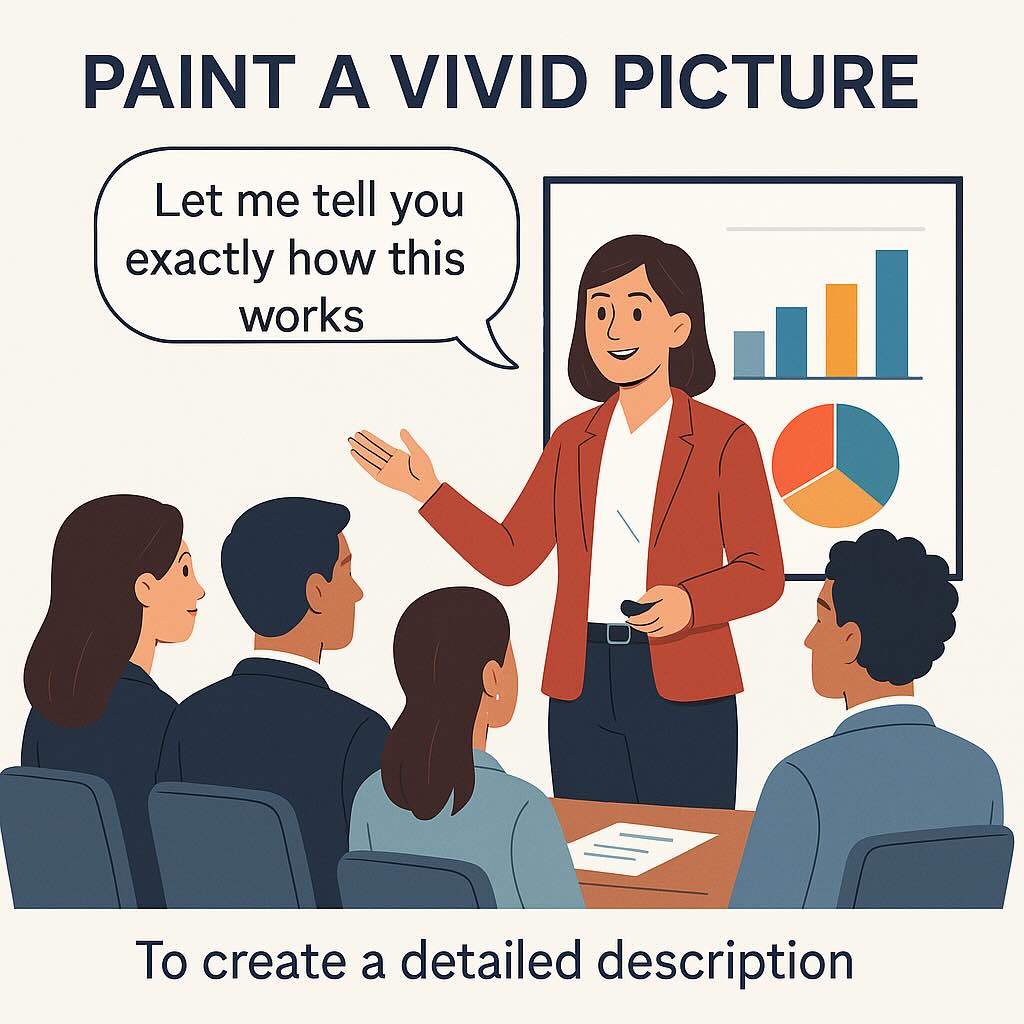
Use words to create a clear, detailed image in someone’s mind.
Describe something in a way that helps the audience imagine it easily.
🧠 Example Sentences
In her presentation, she painted a vivid picture of what daily life will look like with their new app.
The sales manager painted a vivid picture of success to motivate the team.
Instead of using numbers alone, try to paint a vivid picture of the impact on real customers.
🏛️ Origin
This idiom comes from the art world. To “paint” a “vivid picture” means to create something full of colour and detail. In speech or writing, it became a metaphor for using strong words to help people imagine scenes or ideas clearly.
📝 Practice Exercises
1. Fill in the blank:
To make your presentation more engaging, try to _____________ of what the future could look like with this new strategy.
Answer
paint a vivid picture
2. Choose the best meaning of the idiom “paint a vivid picture”:
a) Use bright colors in a PowerPoint
b) Describe something in a way that creates a strong image
c) Present with a loud voice
Answer
b) Describe something in a way that creates a strong image
3. Change the sentence using “paint a vivid picture”:
“She described the future of the company in great detail.”
Answer
She painted a vivid picture of the company’s future.
Rob is a CELTA qualified English teacher with 15 years of international experience. He has a BSc and PGDip from Loughborough and St Andrews universities in the UK. He has taught in Thailand and Saudi Arabia and now works with professionals worldwide.
To visually or mentally engage listeners in a way that draws their focus
🧠 Example Sentences
The presenter’s bold slide design caught the audience’s eye immediately.
She used a powerful opening statement to catch the audience’s eye.
If you want to make an impact, you need to catch the audience’s eye from the start.
🏛️ Origin
This phrase comes from the older idiom “catch someone’s eye,” first used in the 1700s. It originally meant attracting someone’s gaze (make someone want to look more). Later it came to mean getting their attention or interest.
📝 Practice Exercises
1. Fill in the blank:
The speaker used a pretty image to __________.
Answer
catch the audience’s eye
2. Choose the correct meaning of “catch the audience’s eye”:
A) Ignore the audience
B) Attract the audience’s attention
C) Close your eyes during a speech
Answer
B) Attract the audience’s attention
3. Change the sentence using “catch the audience’s eye”:
“She used bright colors on her slides to grab attention.”
Answer
She used bright colors on her slides to catch the audience’s eye.
Rob is a CELTA qualified English teacher with 15 years of international experience. He has a BSc and PGDip from Loughborough and St Andrews universities in the UK. He has taught in Thailand and Saudi Arabia and now works with professionals worldwide.
Be in control of doing a speech or presentation, especially for a long time.
To take and keep control of the conversation/speech.
🧠 Example Sentences
She held the floor for over ten minutes during the Q&A session.
The manager held the floor to explain the new direction of the project.
He tends to hold the floor whenever there’s a debate.
🏛️ Origin
The phrase “hold the floor” comes from parliamentary or formal meeting settings. When someone “holds the floor,” they have permission to speak, often for an extended time, without interruption. This usage dates back to at least the 1800s.
📝 Practice Exercises
1. Fill in the blank:
The speaker __________ for most of the meeting, leaving little time for others.
Answer
held the floor
2. Choose the correct meaning of “hold the floor”:
A) Dance on stage
B) Take notes in a meeting
C) Control the room while speaking
Answer
C)control the room while speaking
3.Change the sentence using “Hold the floor”:
“She spoke for half an hour and kept the audience’s attention.” Answer
Rob is a CELTA qualified English teacher with 15 years of international experience. He has a BSc and PGDip from Loughborough and St Andrews universities in the UK. He has taught in Thailand and Saudi Arabia and now works with professionals worldwide.
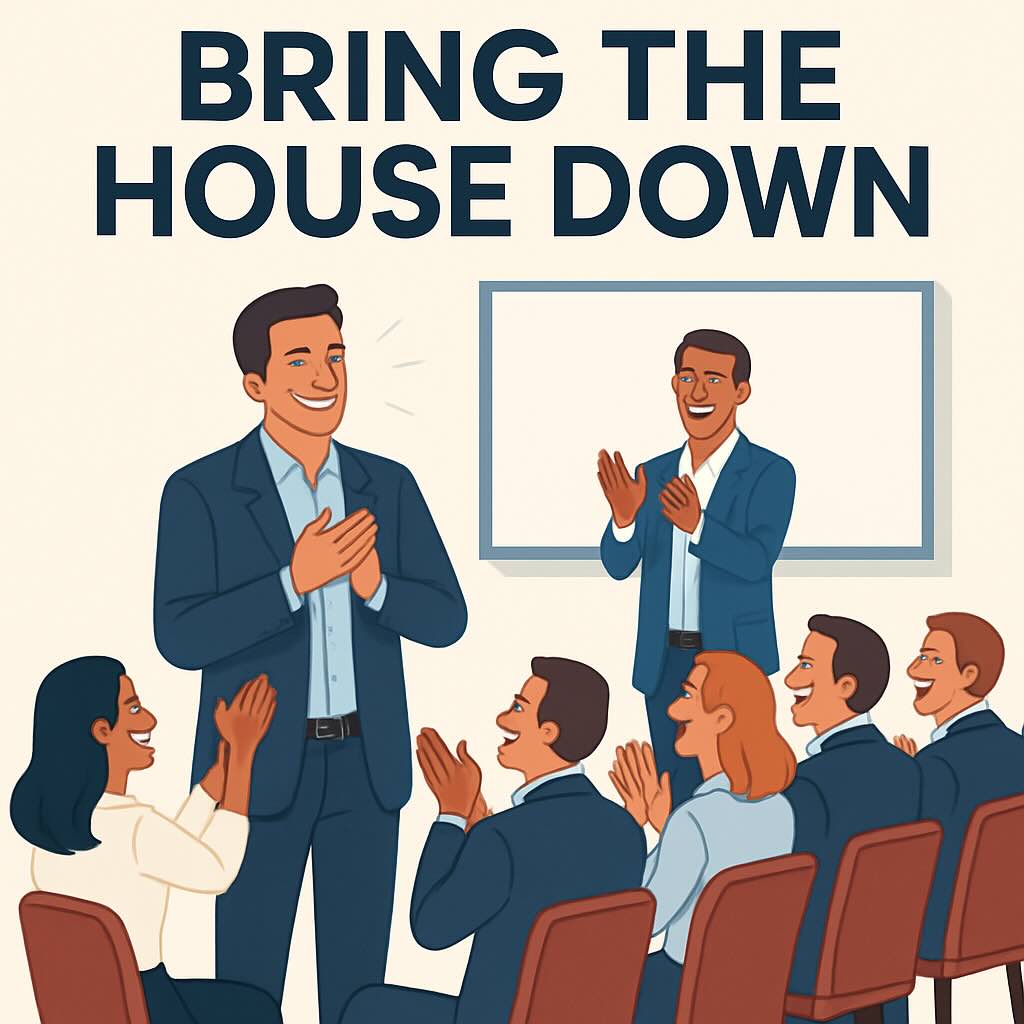
To get a very strong and positive reaction from the audience, usually loud laughter, applause, or cheering.
The speaker or performer entertained the audience greatly.
🧠 Example Sentences
Her joke at the end of the speech brought the house down.
The presenter brought the house down with his very funny closing story.
When she shared her final slide, it brought the house down with laughter.
🏛️ Origin
This idiom comes from theatre. When a performance was so good that the audience reacted loudly, it was said to “bring the house down.” The “house” means the building or theatre, and the strong reaction was like shaking the whole place.
📝 Practice Exercises
1. Fill in the blank:
His final line ________ and got a standing ovation.
Answer
brought the house down
2. Multiple choice:
What does “bring the house down” mean?
a) End a show early
b) Make the audience very quiet
c) Get a loud and positive reaction from the audience
Answer
c) Get a loud and positive reaction from the audience
3. Change the sentence using the idiom:
“He made the audience cheer and laugh loudly with his speech.”
Rob is a CELTA qualified English teacher with 15 years of international experience. He has a BSc and PGDip from Loughborough and St Andrews universities in the UK. He has taught in Thailand and Saudi Arabia and now works with professionals worldwide.
🗓️ Idiom: Keep the Audience On the Edge of Their Seats
💬 Meaning
To keep people very interested, excited, or focused on what you are saying.
The presentation or story is so interesting that no-one wants to look away.
🧠 Example Sentences
Her story kept the audience on the edge of their seats from start to finish.
The speaker used suspense to keep everyone on the edge of their seats.
If you want to keep the audience on the edge of their seats, use strong visuals and examples.
🏛️ Origin
This idiom comes from theatre or cinema. When people are very excited or curious about what will happen next, they literally sit forward on the edge of their seats. It now means keeping an audience deeply engaged.
📝 Practice Exercises
1. Fill in the blank:
The speaker’s energy and suspenseful stories ________.
Answer
kept the audience on the edge of their seats
2. Multiple choice:
What does “keep the audience on the edge of their seats” mean?
a) Make the audience bored
b) Keep the audience excited and focused
c) Ask the audience to stand up
Answer
b) Keep the audience excited and focused
3. Change the sentence Using the idiom:
“The speaker made the audience very interested and they couldn’t stop listening.”
Answer
The speaker kept the audience on the edge of their seats.
Rob is a CELTA qualified English teacher with 15 years of international experience. He has a BSc and PGDip from Loughborough and St Andrews universities in the UK. He has taught in Thailand and Saudi Arabia and now works with professionals worldwide.
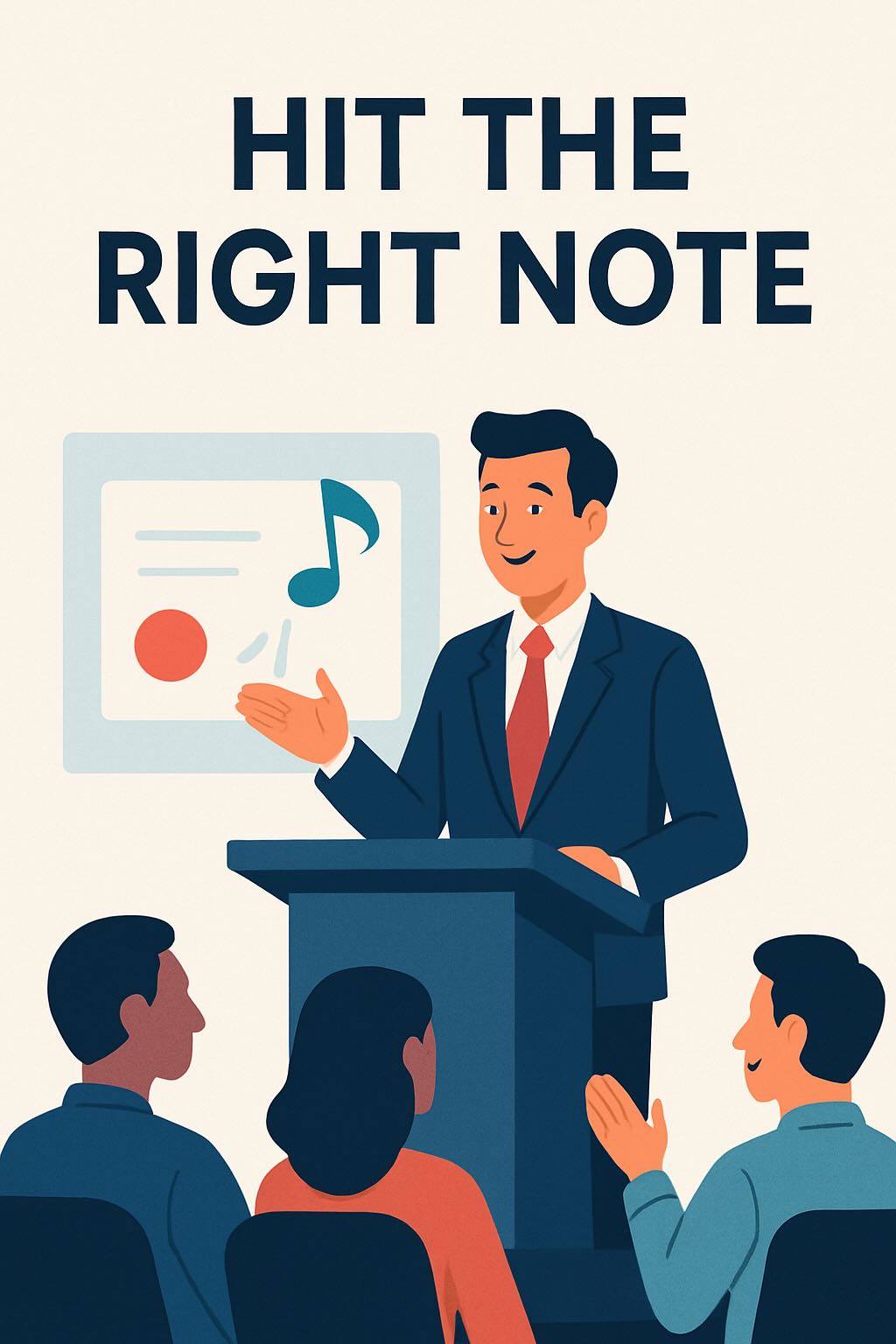
To do or say something in a way that is exactly right for the situation.
Your message, tone, or timing was perfect and well received.
🧠 Example Sentences
Her opening joke hit the right note and made the audience smile.
The speaker hit the right note by thanking the team at the start of the presentation.
You need to hit the right note when presenting to senior managers.
🏛️ Origin
This idiom comes from music. When a musician hits the right note, the sound is correct and pleasant. In speaking, it means choosing the right words or tone for the situation.
📝 Practice Exercises
1. Fill in the blank:
He ________ by starting his speech with a personal story.
Answer
hit the right note
2. Multiple choice:
What does “hit the right note” mean?
a) Speak too quietly
b) Say something inappropriate
c) Say something that fits the situation perfectly
Answer
c) Say something that fits the situation perfectly
3. Rewrite the sentence:
“Her words were exactly what the audience needed to hear.”
Rob is a CELTA qualified English teacher with 15 years of international experience. He has a BSc and PGDip from Loughborough and St Andrews universities in the UK. He has taught in Thailand and Saudi Arabia and now works with professionals worldwide.
Succeed in a big way or do something extremely well.
The result was impressive and better than expected.
🧠 Example Sentences
Her presentation really hit a home run with the audience.
We hit a home run by getting three new clients after the pitch.
He hit a home run with his clear and confident explanation.
🏛️ Origin
This idiom comes from baseball. A home run is when a player hits the ball so well that they can run around all the bases and score. It now means any big success, especially in business or presentations.
📝 Practice Exercises
1. Fill in the blank:
She ________ with her product launch speech. Everyone was impressed.
Answer
hit a home run
2. Multiple choice:
What does “hit a home run” mean?
a) Make a small mistake
b) Do something extremely well
c) Speak too long
Answer
b) Do something extremely well
3. Change the sentence using “hit a home run”:
“He gave an excellent presentation and impressed everyone.”
Rob is a CELTA qualified English teacher with 15 years of international experience. He has a BSc and PGDip from Loughborough and St Andrews universities in the UK. He has taught in Thailand and Saudi Arabia and now works with professionals worldwide.
Get all the attention or praise because of doing something very well.
One person stands out more than others in a positive way.
🧠 Example Sentences
Her presentation stole the show at the conference.
Although everyone did well, James really stole the show with his confident delivery.
The guest speaker stole the show with her inspiring story.
🏛️ Origin
This idiom comes from theatre. When one actor gives such a strong performance that the audience mostly remembers them, they “steal the show.” Now, it is used for any situation where someone gets all the attention or praise.
📝 Practice Exercises
1. Fill in the blank:
Everyone did a good job, but she really ________ with her energy and style.
Answer
stole the show
2. Multiple choice:
What does “steal the show” mean?
a) Get into trouble
b) Take something without permission
c) Be noticed more than others
Answer
c) Be noticed more than others
3. Change the sentence using “Steal the show”:
“He got the most attention because his presentation was the best.”
Answer
He stole the show because his presentation was the best.
Rob is a CELTA qualified English teacher with 15 years of international experience. He has a BSc and PGDip from Loughborough and St Andrews universities in the UK. He has taught in Thailand and Saudi Arabia and now works with professionals worldwide.
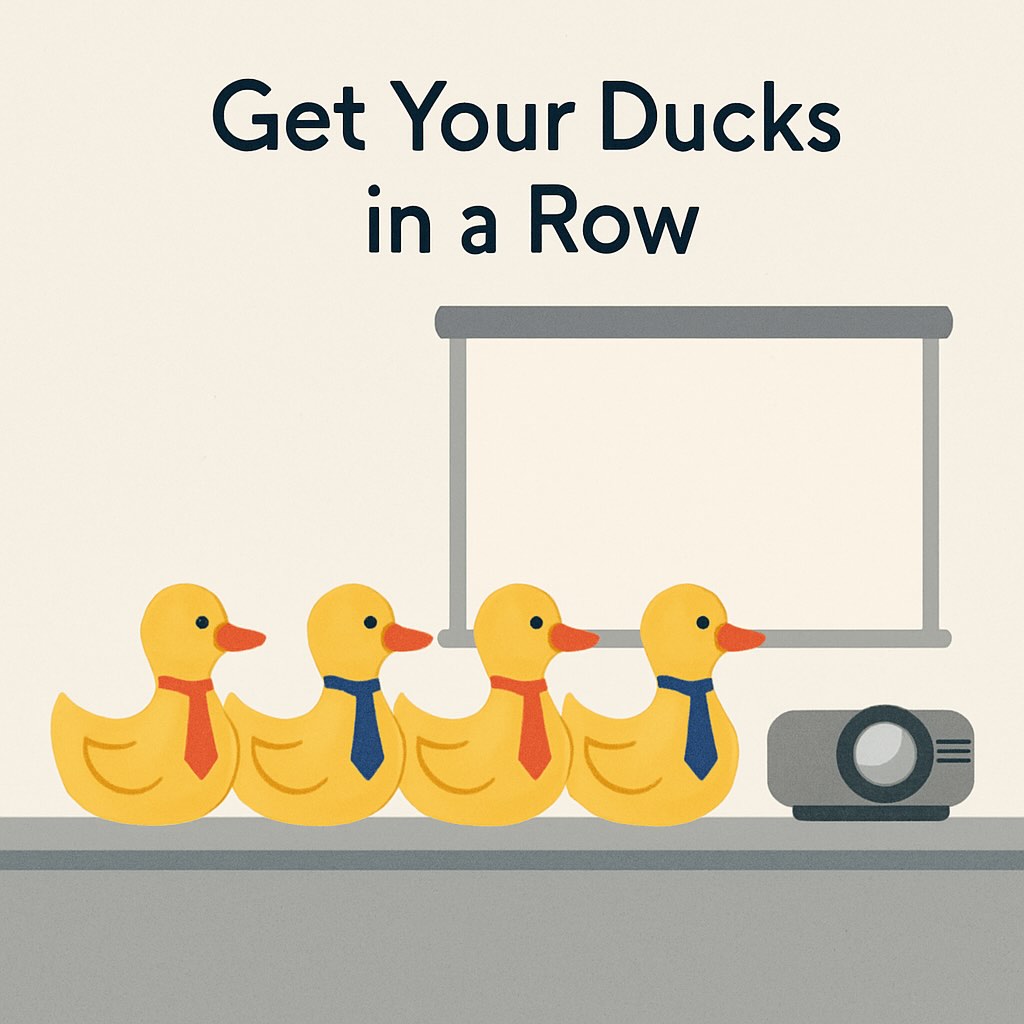
Get everything organised and ready before taking action.
Prepared, planned, and ready.
🧠 Example Sentences
Before your presentation, make sure you get your ducks in a row.
The team got their ducks in a row before meeting the client.
You’ll feel more confident if you get your ducks in a row first.
🏛️ Origin
This idiom likely comes from the way ducklings line up in a neat row behind their mother. It suggests careful organisation and preparation.
📝 Practice Exercises
1. Fill in the blank:
I always ________ before giving a big speech.
Answer
get my ducks in a row
2. Multiple choice:
What does “get your ducks in a row” mean?
a) Act without planning
b) Prepare and organise everything
c) Do things at the last minute
Answer
b) Prepare and organise everything
3. Rewrite the sentence using “get your ducks in a row”:
“It’s important to organise your ideas before presenting.”
Answer
It’s important to get your ducks in a row before presenting.
Rob is a CELTA qualified English teacher with 15 years of international experience. He has a BSc and PGDip from Loughborough and St Andrews universities in the UK. He has taught in Thailand and Saudi Arabia and now works with professionals worldwide.
English for Business Presentations & Speeches: Speak with Confidence
Giving a presentation in English can feel intimidating. Especially when you’re trying to sound professional and natural at the same time. That’s why I’ve put together this Business English vocabulary list for presentations and speeches.
Here you’ll find 30 useful words and phrases divided into Beginner, Intermediate, and Advanced levels. These expressions will help you speak clearly, confidently, and persuasively in any business setting.
Rob is a CELTA qualified English teacher with 15 years of international experience. He has a BSc and PGDip from Loughborough and St Andrews universities in the UK. He has taught in Thailand and Saudi Arabia and now works with professionals worldwide.
Contains information related to marketing campaigns of the user. These are shared with Google AdWords / Google Ads when the Google Ads and Google Analytics accounts are linked together.
90 days
__utma
ID used to identify users and sessions
2 years after last activity
__utmt
Used to monitor number of Google Analytics server requests
10 minutes
__utmb
Used to distinguish new sessions and visits. This cookie is set when the GA.js javascript library is loaded and there is no existing __utmb cookie. The cookie is updated every time data is sent to the Google Analytics server.
30 minutes after last activity
__utmc
Used only with old Urchin versions of Google Analytics and not with GA.js. Was used to distinguish between new sessions and visits at the end of a session.
End of session (browser)
__utmz
Contains information about the traffic source or campaign that directed user to the website. The cookie is set when the GA.js javascript is loaded and updated when data is sent to the Google Anaytics server
6 months after last activity
__utmv
Contains custom information set by the web developer via the _setCustomVar method in Google Analytics. This cookie is updated every time new data is sent to the Google Analytics server.
2 years after last activity
__utmx
Used to determine whether a user is included in an A / B or Multivariate test.
18 months
_ga
ID used to identify users
2 years
_gali
Used by Google Analytics to determine which links on a page are being clicked
30 seconds
_ga_
ID used to identify users
2 years
_gid
ID used to identify users for 24 hours after last activity
24 hours
_gat
Used to monitor number of Google Analytics server requests when using Google Tag Manager