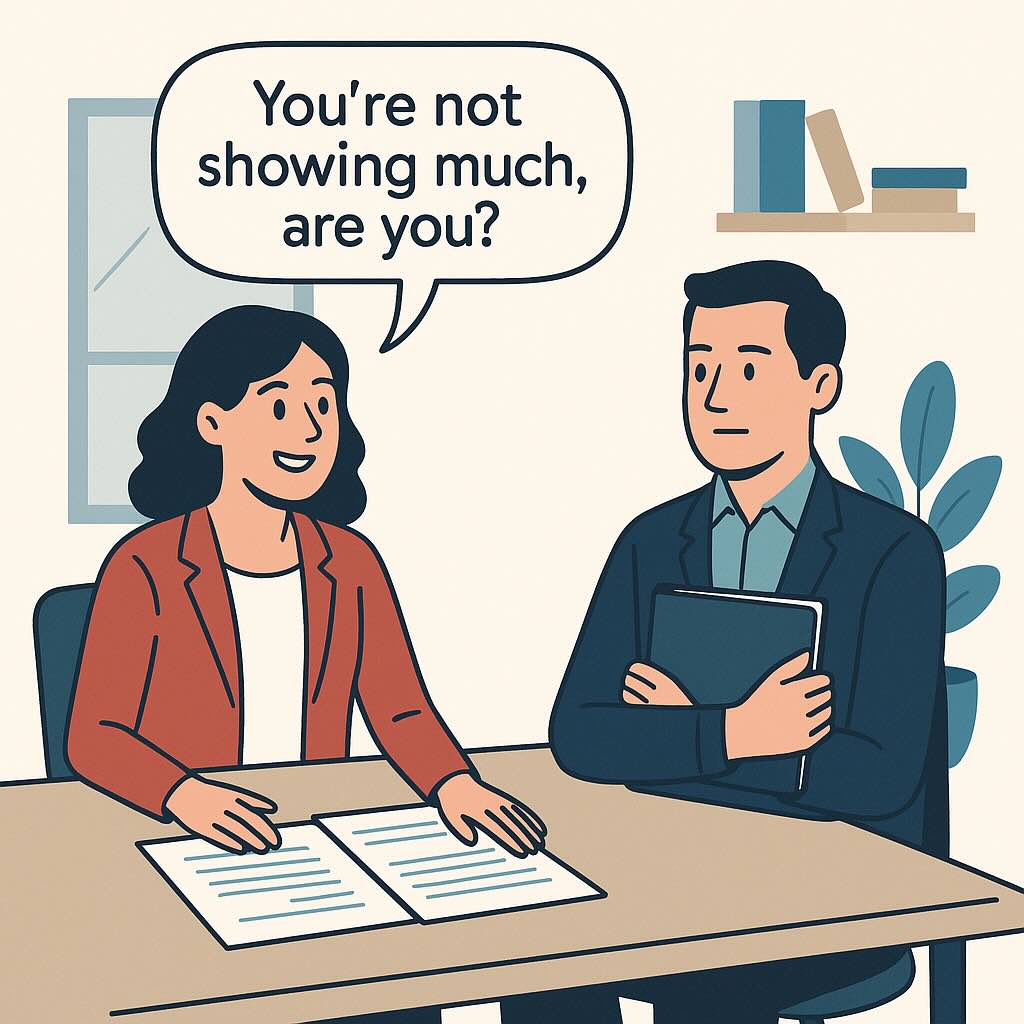
To persuade someone to do something when they might be against it initially.
To convince someone to agree to an idea or action.
🧠 Example Sentences
She talked her colleague into joining the new project.
He was talked into attending the conference even though he was busy.
The manager talked the client into signing the contract early.
🏛️ Origin
This idiom comes from everyday conversational English, using “talk” to mean persuade or influence. It has been commonly used since the early 20th century and is widely used in business, negotiation, and daily situations to describe convincing someone to act.
📝 Practice Exercises
1. Fill in the blank:
She managed to __________ him into agreeing to the new plan.
Answer
talk
2. Multiple choice:
What does “talk someone into something” mean?
a) To force someone physically
b) To persuade someone to do something
c) To ignore someone’s opinion
Answer
b) To persuade someone to do something
3. Change the sentence using talk someone into something:
He convinced his team to accept the new deadline.
Answer
He talked his team into accepting the new deadline.
Rob is a CELTA qualified English teacher with 15 years of international experience. He has a BSc and PGDip from Loughborough and St Andrews universities in the UK. He has taught in Thailand and Saudi Arabia and now works with professionals worldwide.
To understand the hidden meaning or intention behind what is said.
To notice information that is not openly stated.
🧠 Example Sentences
She could read between the lines and understood that the deal might fail.
Managers often need to read between the lines during performance reviews.
He read between the lines of the email and realized the client was unhappy.
🏛️ Origin
The phrase comes from the idea of noticing words or messages “between the lines” of text. It emerged in English in the 19th century and became widely used to describe interpreting hidden meanings, especially in letters, reports, or negotiations.
📝 Practice Exercises
1. Fill in the blank:
To understand his real feelings, she had to __________ between the lines.
Answer
read
2. Multiple choice:
What does “read between the lines” mean?
a) To literally look at text carefully
b) To understand hidden meaning
c) To ignore details in a document
Answer
b) To understand hidden meaning
3. Change the sentence using read between the lines:
He didn’t say it but but she noticed that he was unhappy with the proposal.
Answer
She read between the lines and noticed he was unhappy with the proposal.
Rob is a CELTA qualified English teacher with 15 years of international experience. He has a BSc and PGDip from Loughborough and St Andrews universities in the UK. He has taught in Thailand and Saudi Arabia and now works with professionals worldwide.
To have a secret advantage or plan that you can use when needed.
To keep a hidden resource ready for the right moment.
🧠 Example Sentences
The company had an ace up its sleeve with a new product that surprised competitors.
She always has an ace up her sleeve during negotiations.
The lawyer revealed his ace up his sleeve at the end of the trial.
🏛️ Origin
This phrase comes from card games and gambling. A dishonest player might hide an extra ace up their sleeve to use later. The idiom began appearing in English in the mid-19th century and is now widely used to describe a hidden advantage, not just in games but also in business and daily life.
📝 Practice Exercises
1. Fill in the blank:
The negotiator had an __________ up his sleeve to win the deal.
Answer
ace
2. Multiple choice:
What does “have an ace up your sleeve” mean?
a) To keep a secret advantage
b) To play cards very slowly
c) To share all your ideas at once
Answer
a) To keep a secret advantage
3. Change the sentence using “have an ace up your sleeve”:
The company had a hidden plan to surprise competitors.
Answer
The company had an ace up its sleeve to surprise competitors.
Rob is a CELTA qualified English teacher with 15 years of international experience. He has a BSc and PGDip from Loughborough and St Andrews universities in the UK. He has taught in Thailand and Saudi Arabia and now works with professionals worldwide.
To hide your plans, ideas, or intentions from others.
To avoid sharing too much information in a negotiation or discussion.
🧠 Example Sentences
During the merger talks, the CEO kept his cards close to his chest.
She always keeps her cards close to her chest when discussing contracts.
The company kept its cards close to its chest about the new product launch.
🏛️ Origin
This idiom comes from card games, where holding your cards close to your chest prevents others from seeing them. It has been in use since the 19th century and became common in business to describe people who prefer to keep information private until the right moment.
📝 Practice Exercises
1. Fill in the blank:
The lawyer decided to __________ his cards close to his chest during the negotiations.
Answer
keep
2. Multiple choice:
What does “keep your cards close to your chest” mean?
a) To share all your plans openly
b) To hide your intentions
c) To play a card game carefully
Answer
b) To hide your intentions
3. Change the sentence using “keep your cards close to your chest”:
The manager did not reveal her real strategy during the meeting.
Answer
The manager kept her cards close to her chest during the meeting.
Rob is a CELTA qualified English teacher with 15 years of international experience. He has a BSc and PGDip from Loughborough and St Andrews universities in the UK. He has taught in Thailand and Saudi Arabia and now works with professionals worldwide.
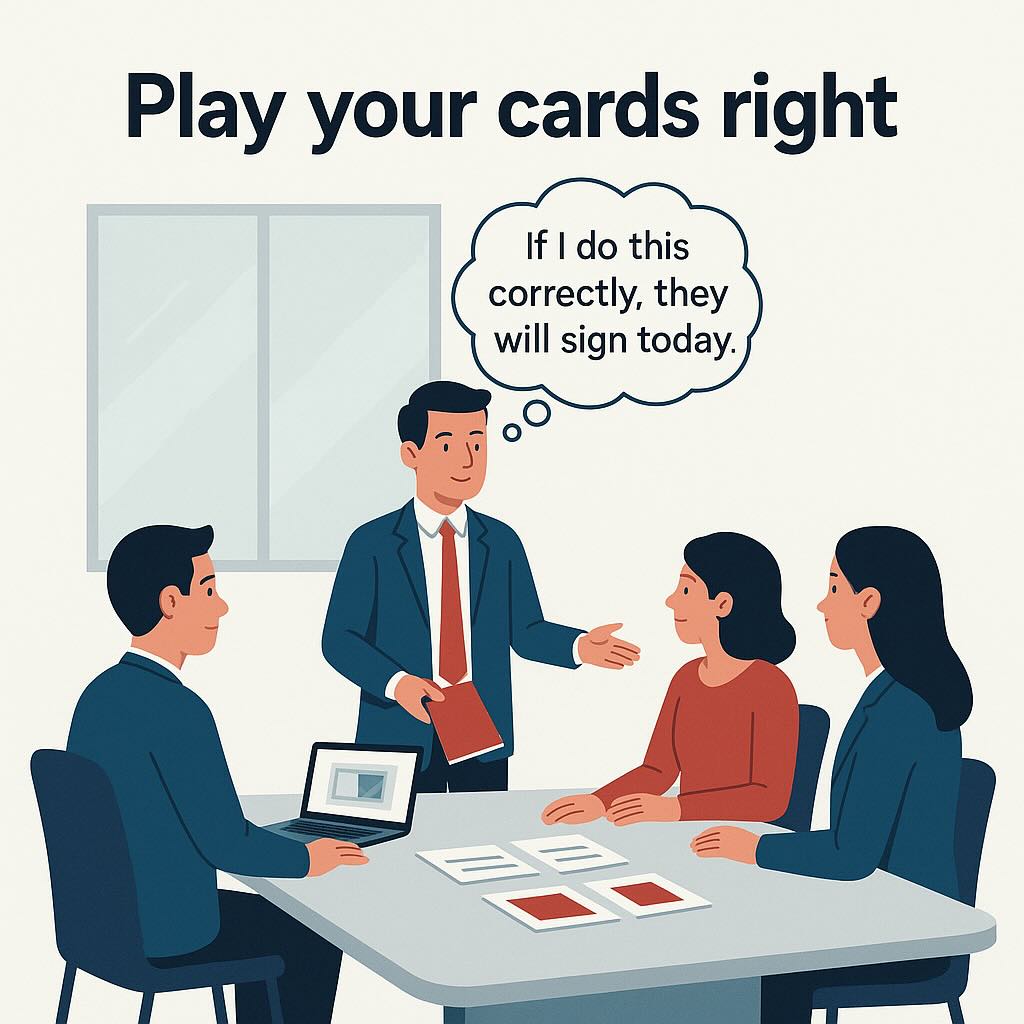
To act wisely and make good choices in order to succeed.
To use opportunities carefully to get the best result.
🧠 Example Sentences
If you play your cards right, you could get a promotion from this project.
The company played its cards right and secured the biggest deal of the year.
She can win the client’s trust if she plays her cards right.
🏛️ Origin
This idiom comes from card games, where success often depends on how well you use the cards you are given. It has been used in English since the 19th century and soon became common to describe using one’s situation skilfully.
📝 Practice Exercises
1. Fill in the blank:
He knew that if he __________ his cards right, he could close the deal.
Answer
played
2. Multiple choice:
What does “play your cards right” mean?
a) To act foolishly and take risks
b) To act wisely to succeed
c) To depend only on luck
Answer
b) To act wisely to succeed
3. Change the sentence using play your cards right:
She used her opportunities carefully and achieved success.
Rob is a CELTA qualified English teacher with 15 years of international experience. He has a BSc and PGDip from Loughborough and St Andrews universities in the UK. He has taught in Thailand and Saudi Arabia and now works with professionals worldwide.
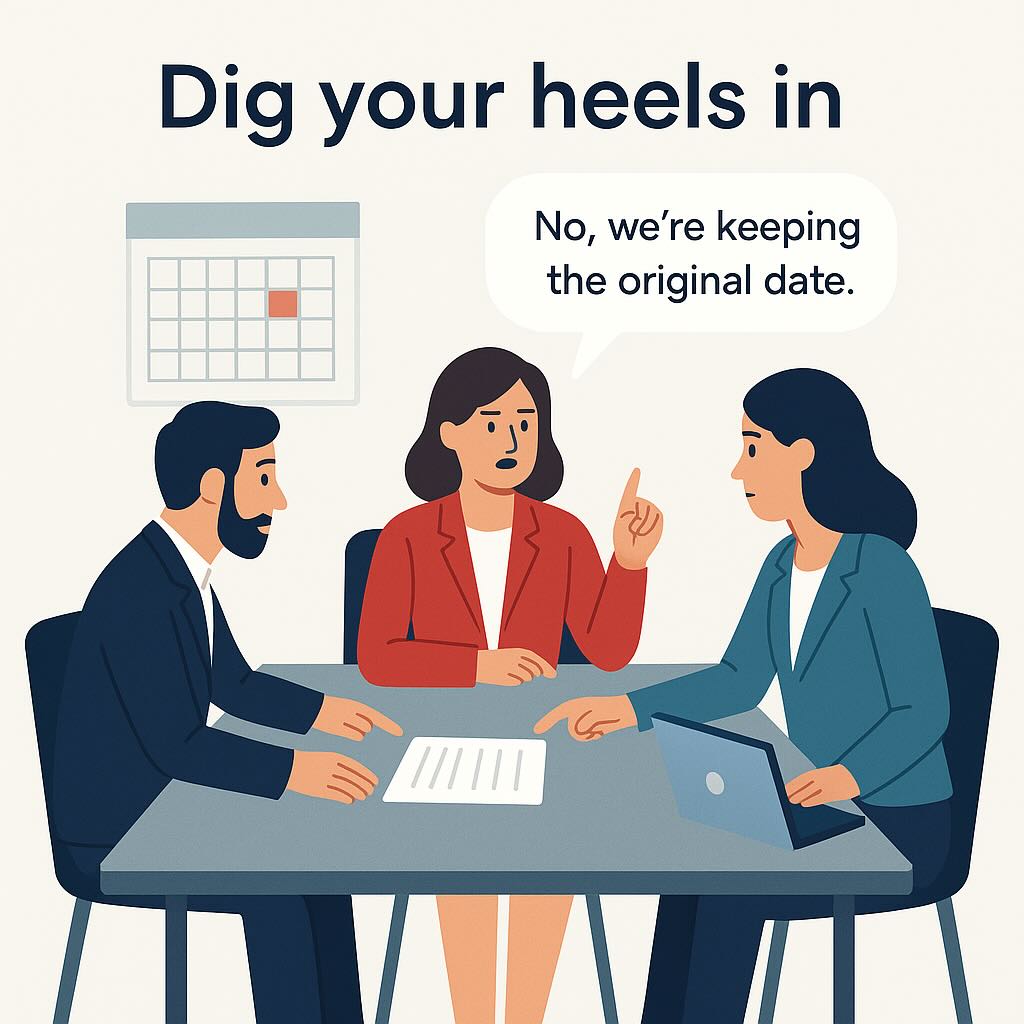
The manager dug his heels in and would not approve extra spending.
She dug her heels in during the negotiations about working hours.
Even with strong opposition, the director dug her heels in on the new policy.
🏛️ Origin
The phrase comes from the idea of digging your heels into the ground to stop moving forward. It has been used in English since the early 19th century, originally linked to the image of a horse refusing to move. It eventually became a common expression for people showing strong resistance in arguments or negotiations.
📝 Practice Exercises
1. Fill in the blank:
Despite criticism, the politician decided to __________ his heels in on the new law.
Answer
dig
2. Multiple choice:
What does “dig your heels in” mean?
a) To walk away from a discussion
b) To give in to other people’s opinions
c) To stay firm and refuse to change
Answer
c) To stay firm and refuse to change
3. Change the sentence using dig your heels in:
She refused to back down during the meeting.
Rob is a CELTA qualified English teacher with 15 years of international experience. He has a BSc and PGDip from Loughborough and St Andrews universities in the UK. He has taught in Thailand and Saudi Arabia and now works with professionals worldwide.
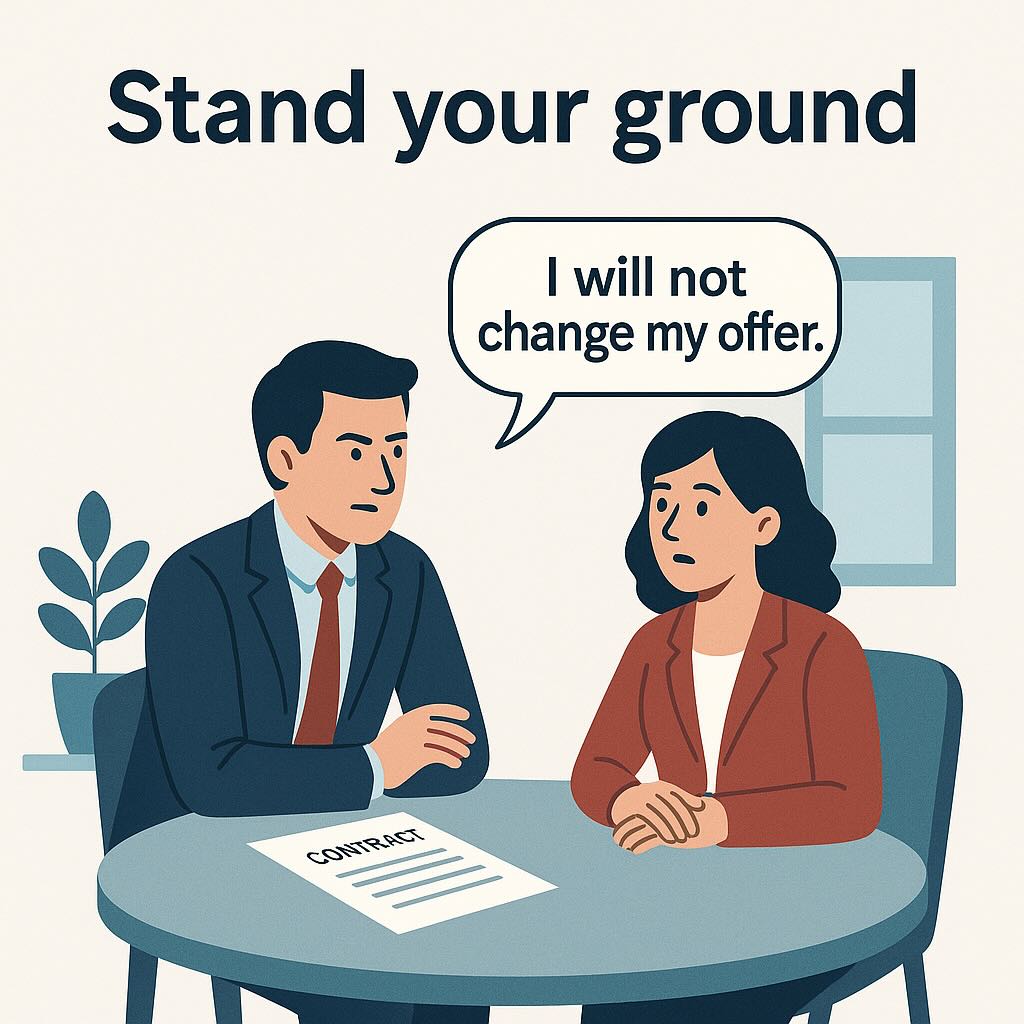
To refuse to change your position, opinion, or decision.
To stay firm even when facing pressure or opposition.
🧠 Example Sentences
During the contract talks, she stood her ground and refused to accept unfair terms.
The manager stood his ground when the client asked for extra services without payment.
It is important to stand your ground if you know your proposal is strong.
🏛️ Origin
The phrase comes from a military context, where soldiers were told to “stand their ground” instead of retreating. Over time, it moved into general English to mean holding firm in one’s position. It has been used in English since at least the 16th century and became more common in everyday business and personal contexts by the 19th century.
📝 Practice Exercises
1. Fill in the blank:
Even when the board disagreed, the CEO decided to __________ her ground on the budget decision.
Answer
stand
2. Multiple choice:
What does “stand your ground” mean?
a) To avoid making a choice
b) To hold firm and not give in
c) To move away from conflict
Answer
b) To hold firm and not give in
3. Change the sentence using stand your ground:
He refused to change his mind even when his colleagues pressured him.
Answer
He stood his ground even when his colleagues pressured him.
Rob is a CELTA qualified English teacher with 15 years of international experience. He has a BSc and PGDip from Loughborough and St Andrews universities in the UK. He has taught in Thailand and Saudi Arabia and now works with professionals worldwide.
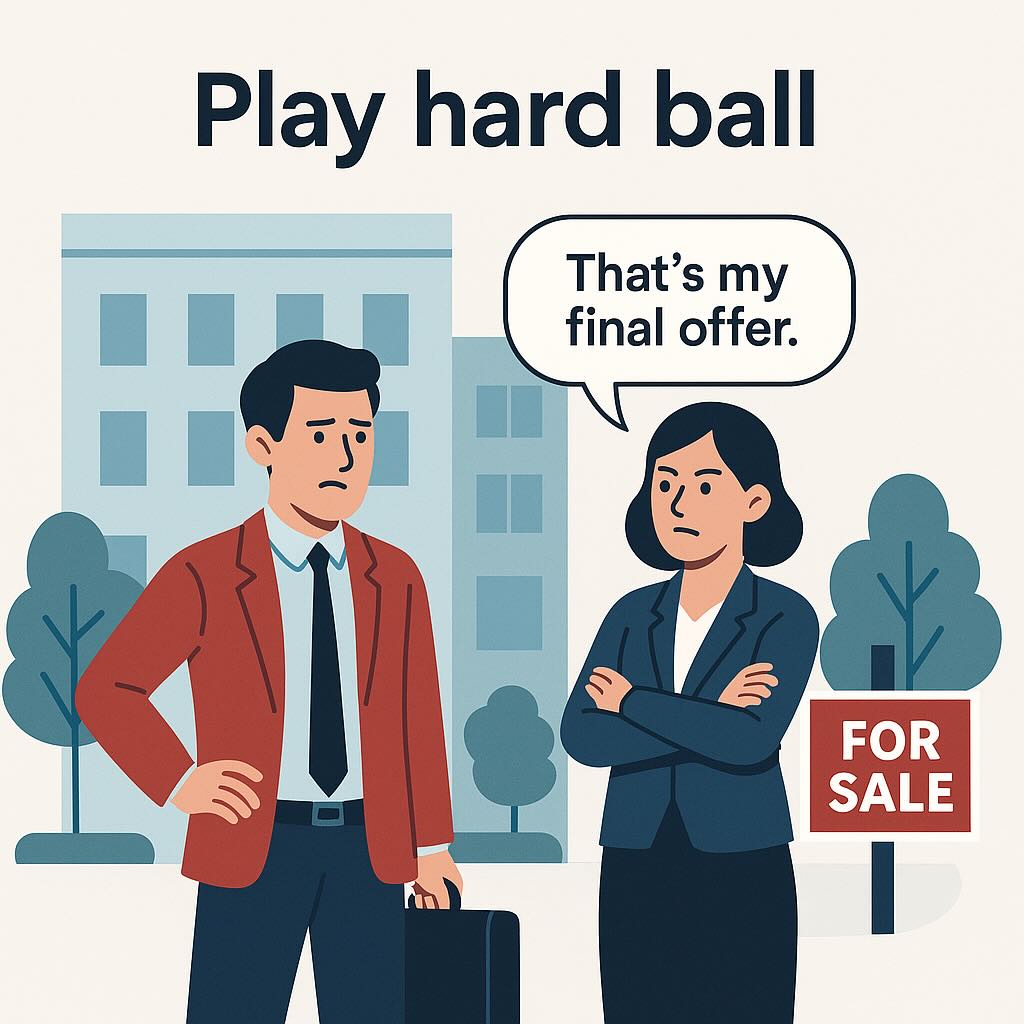
To act in a very tough and firm way in order to win a negotiation.
To refuse to make concessions and use strong tactics.
🧠 Example Sentences
The company decided to play hard ball with the union during salary talks.
He always plays hard ball when negotiating contracts.
Our competitors are playing hard ball to secure the biggest clients.
🏛️ Origin
The idiom comes from the sport of baseball. “Hardball” is the standard, serious version of the game, compared to “softball,” which is easier and less competitive. In business, “playing hard ball” means being strict and competitive rather than gentle or flexible.
📝 Practice Exercises
1. Fill in the blank:
During the negotiation, the manager decided to __________ hard ball to protect the company’s interests.
Answer
play
2. Multiple choice:
What does “play hard ball” mean?
a) To be very flexible in discussions
b) To be tough and competitive in negotiations
c) To avoid making any decision
Answer
b) To be tough and competitive in negotiations
3. Change the sentence using play hard ball:
The lawyer used strict and aggressive tactics during the deal.
Rob is a CELTA qualified English teacher with 15 years of international experience. He has a BSc and PGDip from Loughborough and St Andrews universities in the UK. He has taught in Thailand and Saudi Arabia and now works with professionals worldwide.
English for Negotiations: Find the Right Words to Reach an Agreement
Negotiating in English can be tricky. You want to sound confident and polite while still getting what you need. This English for Negotiations vocabulary list will help you handle discussions, offers, and compromises more effectively.
You’ll find 60 practical Business English words and phrases, divided into Beginner, Intermediate, and Advanced levels. These expressions will help you make proposals, express disagreement diplomatically, and close deals smoothly.
Rob is a CELTA qualified English teacher with 15 years of international experience. He has a BSc and PGDip from Loughborough and St Andrews universities in the UK. He has taught in Thailand and Saudi Arabia and now works with professionals worldwide.
Contains information related to marketing campaigns of the user. These are shared with Google AdWords / Google Ads when the Google Ads and Google Analytics accounts are linked together.
90 days
__utma
ID used to identify users and sessions
2 years after last activity
__utmt
Used to monitor number of Google Analytics server requests
10 minutes
__utmb
Used to distinguish new sessions and visits. This cookie is set when the GA.js javascript library is loaded and there is no existing __utmb cookie. The cookie is updated every time data is sent to the Google Analytics server.
30 minutes after last activity
__utmc
Used only with old Urchin versions of Google Analytics and not with GA.js. Was used to distinguish between new sessions and visits at the end of a session.
End of session (browser)
__utmz
Contains information about the traffic source or campaign that directed user to the website. The cookie is set when the GA.js javascript is loaded and updated when data is sent to the Google Anaytics server
6 months after last activity
__utmv
Contains custom information set by the web developer via the _setCustomVar method in Google Analytics. This cookie is updated every time new data is sent to the Google Analytics server.
2 years after last activity
__utmx
Used to determine whether a user is included in an A / B or Multivariate test.
18 months
_ga
ID used to identify users
2 years
_gali
Used by Google Analytics to determine which links on a page are being clicked
30 seconds
_ga_
ID used to identify users
2 years
_gid
ID used to identify users for 24 hours after last activity
24 hours
_gat
Used to monitor number of Google Analytics server requests when using Google Tag Manager