Tag: communication

  • The Most Effective Idioms For Emails


    The Most Effective Idioms For Emails

    Professional emails do not need to sound stiff or overly formal. With the right expressions, you can make your writing clearer, warmer, and easier for readers to understand. In this guide, I show you the most effective idioms for emails. You will see when to use each idiom, when to avoid it, and how to use it naturally in real workplace messages. I have also included short practice tasks so you can build confidence as you go.


    1. Idioms That Improve Clarity in Emails

    These idioms help you describe progress, status, or uncertainty in a simple, friendly way.

    Touch base (v)

    Meaning: Contact someone for a quick update.
    Email example: โ€œCan we touch base tomorrow morning about the project timeline?โ€
    Teacher tip: Friendly and natural. Suitable for colleagues, but avoid in very formal messages.

    Keep Someone In the loop (v)

    Meaning: Keep someone informed.
    Email example: โ€œIโ€™ll keep you in the loop if anything changes.โ€
    Teacher tip: Good for teamwork. Clear in most English-speaking workplaces.

    Up in the air (adj)

    Meaning: Something is still undecided.
    Email example: โ€œThe exact launch date is still up in the air.โ€
    Teacher tip: Fine for internal emails. Avoid with clients who may want more precise information.

    On track (adj)

    Meaning: Moving forward as planned.
    Email example: โ€œEverything is on track for Fridayโ€™s delivery.โ€

    ๐Ÿ‘‰ More idioms about Business Communication


    Test Yourself:

    1. What does “touch base” mean?
    a) Contact someone briefly
    b) Start a project
    c) Complete a task

    Answer

    a) Contact someone briefly

    2. What does “keep someone in the loop” mean?
    a) Not inform someone
    b) inform someone
    c) Confused

    Answer

    b) inform someone

    3. What does “up in the air” mean?
    a) Uncertain or undecided
    b) Completed
    c) Important

    Answer

    a) Uncertain or undecided

    4. What does “on track” mean?
    a) Behind schedule
    b) Moving forward as planned
    c) Needs review

    Answer

    b) Moving forward as planned


    2. Idioms for Softening Requests

    These expressions help you make polite requests without sounding demanding.

    At your earliest convenience

    Meaning: When you have time (polite).
    Email example: โ€œPlease send the updated slides at your earliest convenience.โ€

    Give me a heads-up

    Meaning: Inform someone before something happens.
    Email example: โ€œPlease give me a heads-up if you expect any delays.โ€

    On your radar

    Meaning: Something you should be aware of.
    Email example: โ€œI wanted to put this potential issue on your radar.โ€
    Teacher tip: Friendly and modern. Works well in most professional emails.


    Test Yourself:

    1. What does “at your earliest convenience” mean?
    a) Do it as soon as you can (polite request)
    b) Whenever you want (No rush)
    c) Immediately, urgently (Now)

    Answer

    a) Do it as soon as you can (polite request)

    2. What does “give me a heads-up” mean?
    a) Ignore me
    b) Inform me before something happens
    c) Start the work yourself

    Answer

    b) Inform me before something happens

    3. What does “on your radar” mean?
    a) Something you should notice
    b) Something to avoid
    c) Something you should complete now

    Answer

    a) Something you should notice


    3. Idioms for Expressing Deadlines and Time Pressure

    These expressions help you talk about timing in a clear, relatable way.

    Against the clock (adj)

    Meaning: Working under time pressure.
    Email example: โ€œOur team is working against the clock to finalise the report.โ€

    In no time (adj)

    Meaning: Very quickly.
    Email example: โ€œIโ€™ll review the proposal and get back to you in no time.โ€

    Last-minute (adj)

    Meaning: Very late or close to the deadline.
    Email example: โ€œThanks for handling that last-minute request.โ€
    Teacher tip: Neutral and widely used, but avoid overusing it.

    ๐Ÿ‘‰ More Time Management Idioms.


    Test Yourself:

    1. What does “against the clock” mean?
    a) Working under time pressure
    b) Working calmly
    c) Starting early

    Answer

    a) Working under time pressure

    2. What does “in no time” mean?
    a) Very slowly
    b) Very quickly
    c) At a fixed time

    Answer

    b) Very quickly

    3. What does “last-minute” mean?
    a) Very late, close to the deadline
    b) Planned in advance
    c) Early submission

    Answer

    a) Very late, close to the deadline


    4. Idioms for Strengthening Tone and Building Relationships

    These idioms help you sound supportive and collaborative.

    On the same page (adj)

    Meaning: Share the same understanding.
    Email example: โ€œLetโ€™s have a quick chat to make sure weโ€™re on the same page before the call.โ€

    Go the extra mile (V)

    Meaning: Put in extra effort.
    Email example: โ€œThank you for going the extra mile with yesterdayโ€™s presentation.โ€

    A quick win (n)

    Meaning: A small action with a fast result.
    Email example: โ€œCleaning up the shared folder could be a quick win for our team.โ€

    Use these idioms to create a positive and collaborative tone. They work especially well in team communication.


    Test Yourself:

    1. What does “on the same page” mean?
    a) Share the same understanding
    b) Disagree on plans
    c) Read a book together

    Answer

    a) Share the same understanding

    2. What does “go the extra mile” mean?
    a) Put in extra effort
    b) Travel a long distance
    c) Finish quickly

    Answer

    a) Put in extra effort

    3. What does “a quick win” mean?
    a) A small, easily achieved success
    b) A long-term goal
    c) A competition victory

    Answer

    a) A small, easily achieved success


    5. When NOT to Use Idioms in Emails

    Idioms can cause confusion in certain situations. Avoid them when:

    • Communicating with clients or partners who may not be confident in English
    • Writing legal, financial, or highly technical information
    • Sending messages where clarity must be 100% certain
    • You are unsure whether the reader will understand the expression

    Teacher tip: If clarity is more important than tone, choose plain English.


    6. Get Daily Idiom Support by Email

    If you want to build your idiom skills step by step, you can join my Daily Idiom Email. Youโ€™ll receive one useful business idiom each day, with an example and a short explanation.

    ๐Ÿ‘‰ Sign up here: Get a Daily Idiom

    Itโ€™s an easy, low-pressure way to grow your vocabulary.


    7. Useful Idiom Resources on the Site

    Here are links to help you explore idioms by category โ€” perfect if you want quick access to more examples:

    ๐Ÿ‘‰ Business Communication Idioms
    ๐Ÿ‘‰ Time Management Idioms
    ๐Ÿ‘‰ Sales & Customer Service Idioms
    ๐Ÿ‘‰ A-Z Business English Idioms List


    Conclusion

    Idioms can make your emails clearer, friendlier, and more natural โ€” if you use them with confidence. Start with a few expressions that feel comfortable, and practise them in low-risk situations such as internal messages. Over time, youโ€™ll develop an email style that is clear, professional, and uniquely yours.


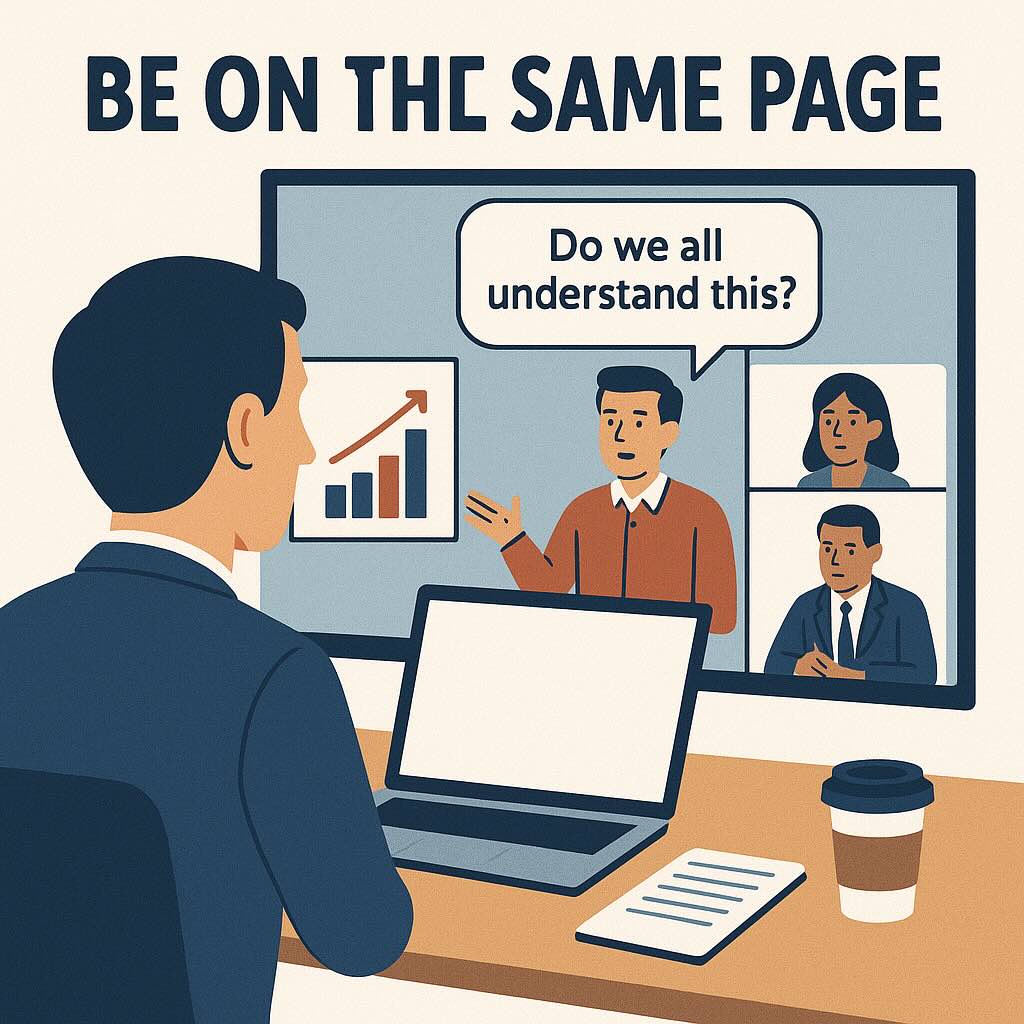
  • Be on the Same Page


    Be on The Same Page Meaning

    ๐Ÿ—“๏ธ Idiom: Be on the Same Page (verb phrase)


    ๐Ÿ’ฌ Meaning

    • To have the same understanding about something.
    • To agree on what needs to be done or discussed.

    ๐Ÿง  Example Sentences

    • Letโ€™s have a meeting to make sure we are on the same page.
    • The team is on the same page regarding the project goals.
    • Itโ€™s important to be on the same page before sending the report to the client.

    ๐Ÿ›๏ธ Origin

    This idiom comes from printing and publishing, where โ€œpagesโ€ referred to the physical sheets of text. To be on the same page meant to literally have the same sheet open and later came to mean agreement or shared understanding.


    ๐Ÿ“ Practice Exercises

    1. Fill in the blank:
    “Before we proceed, we need to __________ on the same page.”

    Answer

    be

    2. Multiple choice:
    What does “be on the same page” mean?
    a) To physically sit on the same book page
    b) To have the same understanding or agreement
    c) To write on the same page

    Answer

    b) To have the same understanding or agreement

    3. Change the sentence using โ€œbe on the same pageโ€:
    We all need to agree on the plan before starting the project.

    Answer

    We all need to be on the same page before starting the project.


    โ„น๏ธ Other Useful Pages


    ๐Ÿ“š Learning Resources

    ๐Ÿ‘‰ Main Idioms Page
    ๐Ÿ‘‰ Idioms for Communication

    ๐Ÿ‘ฅ Support Spaces

    ๐Ÿ‘‰ Student Space
    ๐Ÿ‘‰ Tutor Toolkit

    โญ๏ธ Extras

    ๐Ÿ“ซ Get a Daily Idiom
    ๐Ÿš€ Build a Business with AI


  • Talk Shop


    Talk shop meaning

    ๐Ÿ—“๏ธ Idiom: Talk Shop (verb phrase)


    ๐Ÿ’ฌ Meaning

    • To discuss work or business matters, especially outside of the workplace.
    • To focus on professional topics rather than casual conversation.

    ๐Ÿง  Example Sentences

    • They always talk shop during lunch breaks.
    • I donโ€™t want to talk shop at the party; letโ€™s just relax.
    • After the conference, the team stayed behind to talk shop.

    ๐Ÿ›๏ธ Origin

    This idiom comes from the 19th century, where โ€œshopโ€ referred to a workplace or business. Talking about work matters outside of the workplace became known as โ€œtalking shop.โ€


    ๐Ÿ“ Practice Exercises

    1. Fill in the blank:
    “They tend to __________ shop even when they meet socially.”

    Answer

    talk

    2. Multiple choice:
    What does “talk shop” mean?
    a) To discuss work or business matters
    b) To go shopping together
    c) To gossip about friends

    Answer

    a) To discuss work or business matters

    3. Change the sentence using โ€œtalk shopโ€:
    They spent the evening discussing work topics instead of socializing.

    Answer

    They spent the evening talking shop instead of socializing.


    โ„น๏ธ Other Useful Pages


    ๐Ÿ“š Learning Resources

    ๐Ÿ‘‰ Main Idioms Page
    ๐Ÿ‘‰ Idioms for Communication

    ๐Ÿ‘ฅ Support Spaces

    ๐Ÿ‘‰ Student Space
    ๐Ÿ‘‰ Tutor Toolkit

    โญ๏ธ Extras

    ๐Ÿ“ซ Get a Daily Idiom
    ๐Ÿš€ Build a Business with AI


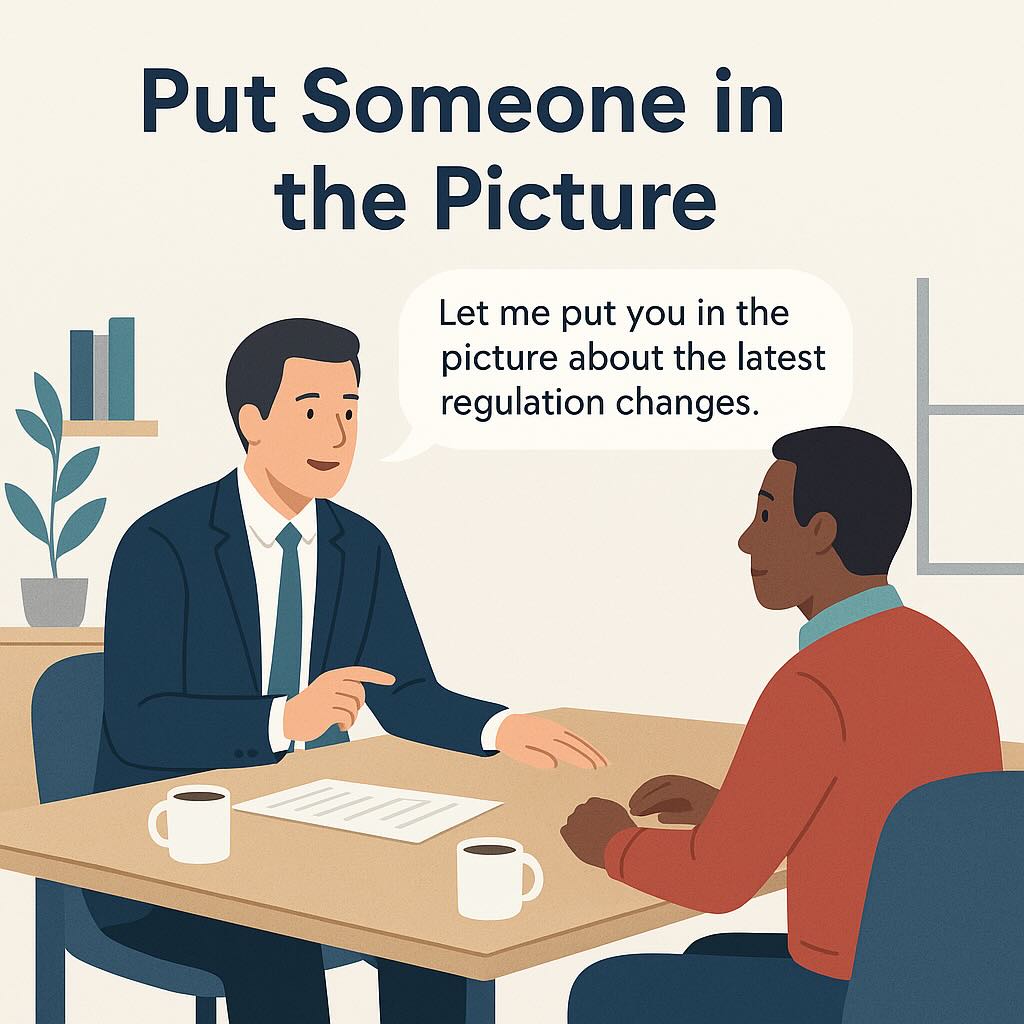
  • Put Someone in the Picture


    put someone in the picture meaning

    ๐Ÿ—“๏ธ Idiom: Put Someone in the Picture (verb phrase)


    ๐Ÿ’ฌ Meaning

    • To explain a situation clearly to someone.
    • To give someone all the information they need about a situation.

    ๐Ÿง  Example Sentences

    • Before the meeting, she put me in the picture about the new project.
    • The manager put the team in the picture regarding the changes in policy.
    • Could you put me in the picture about what happened yesterday?

    ๐Ÿ›๏ธ Origin

    This idiom comes from the idea of a โ€œpictureโ€ as a complete view of something. To put someone in the picture means to give them the full view or understanding of a situation.


    ๐Ÿ“ Practice Exercises

    1. Fill in the blank:
    “He put me in the ________ about the latest updates.”

    Answer

    picture

    2. Multiple choice:
    What does “put someone in the picture” mean?
    a) To draw a portrait of someone
    b) To give someone the information they need
    c) To invite someone to an art exhibition

    Answer

    b) To give someone the information they need

    3. Change the sentence using “put someone in the picture”:
    She explained everything to me before the presentation.

    Answer

    She put me in the picture before the presentation.


    โ„น๏ธ Other Useful Pages


    ๐Ÿ“š Learning Resources

    ๐Ÿ‘‰ Main Idioms Page
    ๐Ÿ‘‰ Idioms for Communication

    ๐Ÿ‘ฅ Support Spaces

    ๐Ÿ‘‰ Student Space
    ๐Ÿ‘‰ Tutor Toolkit

    โญ๏ธ Extras

    ๐Ÿ“ซ Get a Daily Idiom
    ๐Ÿš€ Build a Business with AI


  • Hit the Nail on the Head


    Hit the Nail on the Head meaning

    ๐Ÿ—“๏ธ Idiom: Hit the Nail on the Head (verb phrase)


    ๐Ÿ’ฌ Meaning

    • To describe something accurately or do something in the most effective way.
    • To be exactly right about a problem or solution.

    ๐Ÿง  Example Sentences

    • You really hit the nail on the head with that suggestion.
    • The consultant hit the nail on the head when identifying the main issue.
    • In the meeting, she hit the nail on the head with her analysis of the situation.

    ๐Ÿ›๏ธ Origin

    This idiom comes from carpentry. Striking the nail directly on the head drives it in effectively, while missing the head can cause problems. It became a metaphor for being accurate or correct in speech or action.


    ๐Ÿ“ Practice Exercises

    1. Fill in the blank:
    “His comment really __________ the nail on the head about our marketing problem.”

    Answer

    hit

    2. Multiple choice:
    What does “hit the nail on the head” mean?
    a) To fix a nail with a hammer
    b) To be exactly right about something
    c) To start a construction project

    Answer

    b) To be exactly right about something

    3. Change the sentence using hit the nail on the head:
    Her analysis perfectly identified the key problem in the project.

    Answer

    Her analysis hit the nail on the head with the key problem in the project.


    โ„น๏ธ Other Useful Pages


    ๐Ÿ“š Learning Resources

    ๐Ÿ‘‰ Main Idioms Page
    ๐Ÿ‘‰ Idioms for Communication

    ๐Ÿ‘ฅ Support Spaces

    ๐Ÿ‘‰ Student Space
    ๐Ÿ‘‰ Tutor Toolkit

    โญ๏ธ Extras

    ๐Ÿ“ซ Get a Daily Idiom
    ๐Ÿš€ Build a Business with AI


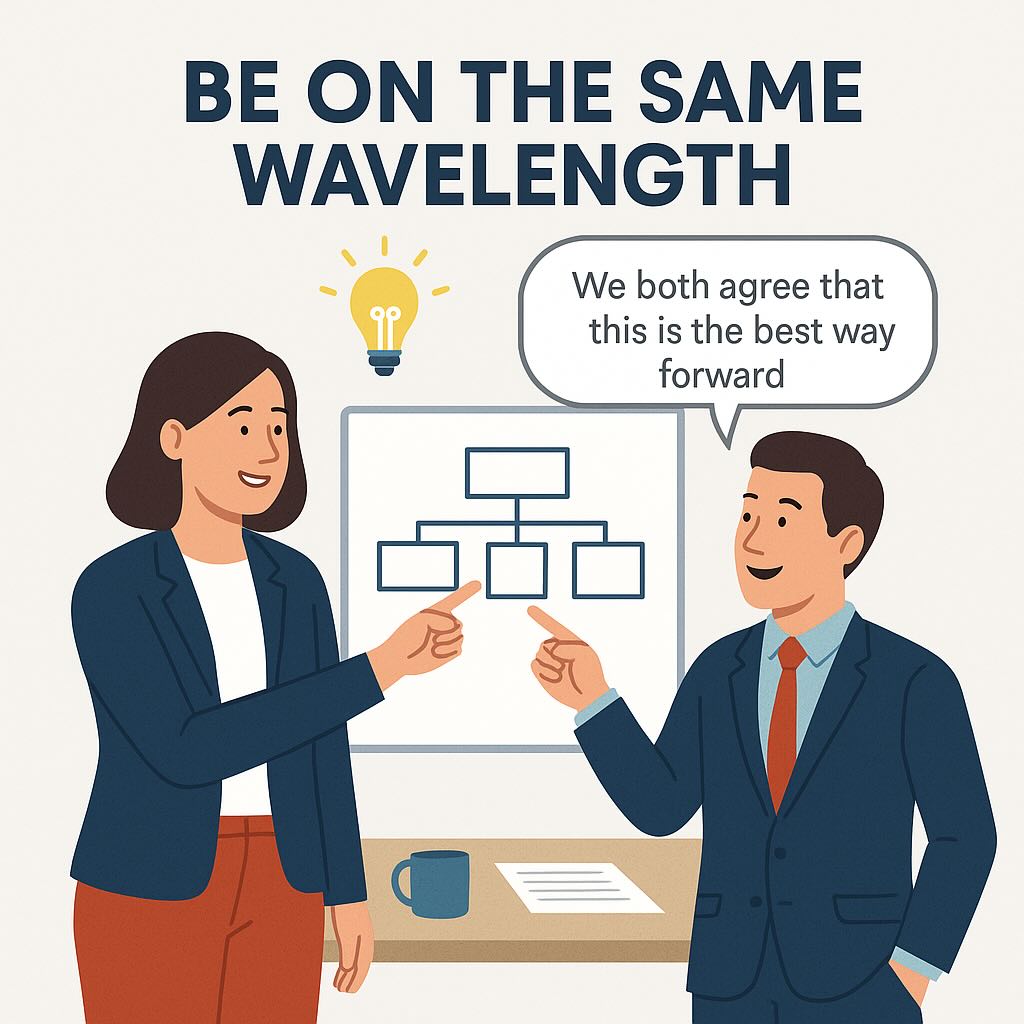
  • Be on the Same Wavelength


    Be on the same wavelength meaning

    ๐Ÿ—“๏ธ Idiom: Be on the Same Wavelength (v)


    ๐Ÿ’ฌ Meaning

    • To share similar thoughts, opinions, or ways of thinking.
    • To easily understand and communicate with each other.

    ๐Ÿง  Example Sentences

    • During the presentation, it was clear the two co-presenters were on the same wavelength.
    • The manager and assistant were on the same wavelength, which made communication seamless.
    • Itโ€™s easier to collaborate when your team is on the same wavelength.

    ๐Ÿ›๏ธ Origin

    This idiom comes from radio technology in the early 20th century. Radios work by tuning to the same wavelength to receive a clear signal. The phrase later became a metaphor for people who understand each other well.


    ๐Ÿ“ Practice Exercises

    1. Fill in the blank:

    The meeting went smoothly because everyone was __________ about the goals.

    Answer

    on the same wavelength

    2. Choose the correct meaning of โ€œbe on the same wavelengthโ€:

    A) To think alike and understand each other easily
    B) To use the same internet connection
    C) To agree to disagree

    Answer

    A) To think alike and understand each other easily

    3. Rewrite the sentence using “Be on the same wavelength”:

    โ€œWe worked well together because we had the same ideas and communication style.โ€

    Answer

    We worked well together because we were on the same wavelength.


    โ„น๏ธ Other Useful Pages


    ๐Ÿ“š Learning Resources

    ๐Ÿ‘‰ Main Idioms Page
    ๐Ÿ‘‰ Idioms for Communication

    ๐Ÿ‘ฅ Support Spaces

    ๐Ÿ‘‰ Student Space
    ๐Ÿ‘‰ Tutor Toolkit

    โญ๏ธ Extras

    ๐Ÿ“ซ Get a Daily Idiom
    ๐Ÿš€ Build a Business with AI


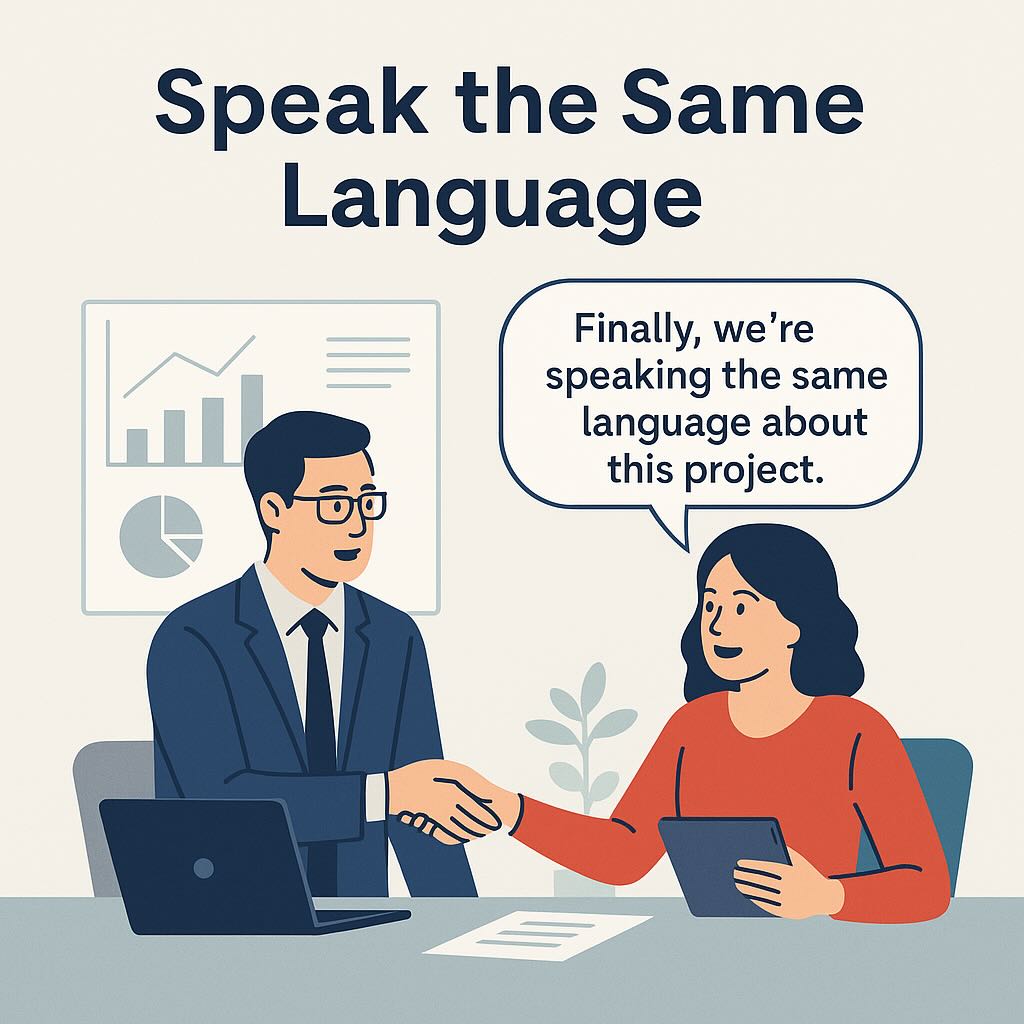
  • Speak the Same Language


    Speak the same language meaning

    ๐Ÿ—“๏ธ Idiom: Speak the Same Language (v)


    ๐Ÿ’ฌ Meaning

    • To understand each other easily because of shared ideas, values, or communication styles.
    • To be in agreement or have mutual understanding in discussions or work.

    ๐Ÿง  Example Sentences

    • The marketing and design teams finally started speaking the same language after the kickoff meeting.
    • When working with international clients, itโ€™s important to ensure youโ€™re speaking the same languageโ€” literally and figuratively.
    • The project went smoothly because the client and consultant spoke the same language from the beginning.

    ๐Ÿ›๏ธ Origin

    To speak the same language comes from the use of โ€œlanguageโ€ to mean shared understanding. It became popular in the 20th century to describe people or groups with similar views or goals.


    ๐Ÿ“ Practice Exercises

    1. Fill in the blank:

    We made fast progress because we were able to __________ from the start.

    Answer

    speak the same language

    2. Choose the correct meaning of โ€œspeak the same languageโ€:

    A) To use identical words
    B) To share a common understanding or communication style
    C) To translate a sentence

    Answer

    B) To share a common understanding or communication style

    3. Rewrite the sentence using “speak the same language”:

    โ€œThey understood each other easily because they had similar ideas and goals.โ€

    Answer

    They understood each other easily because they spoke the same language.


    ๐Ÿ“š Learning Resources

    ๐Ÿ‘‰ Main Idioms Page
    ๐Ÿ‘‰ Idioms for Communication

    ๐Ÿ‘ฅ Support Spaces

    ๐Ÿ‘‰ Student Space
    ๐Ÿ‘‰ Tutor Toolkit

    โญ๏ธ Extras

    ๐Ÿ“ซ Get a Daily Idiom
    ๐Ÿš€ Build a Business with AI


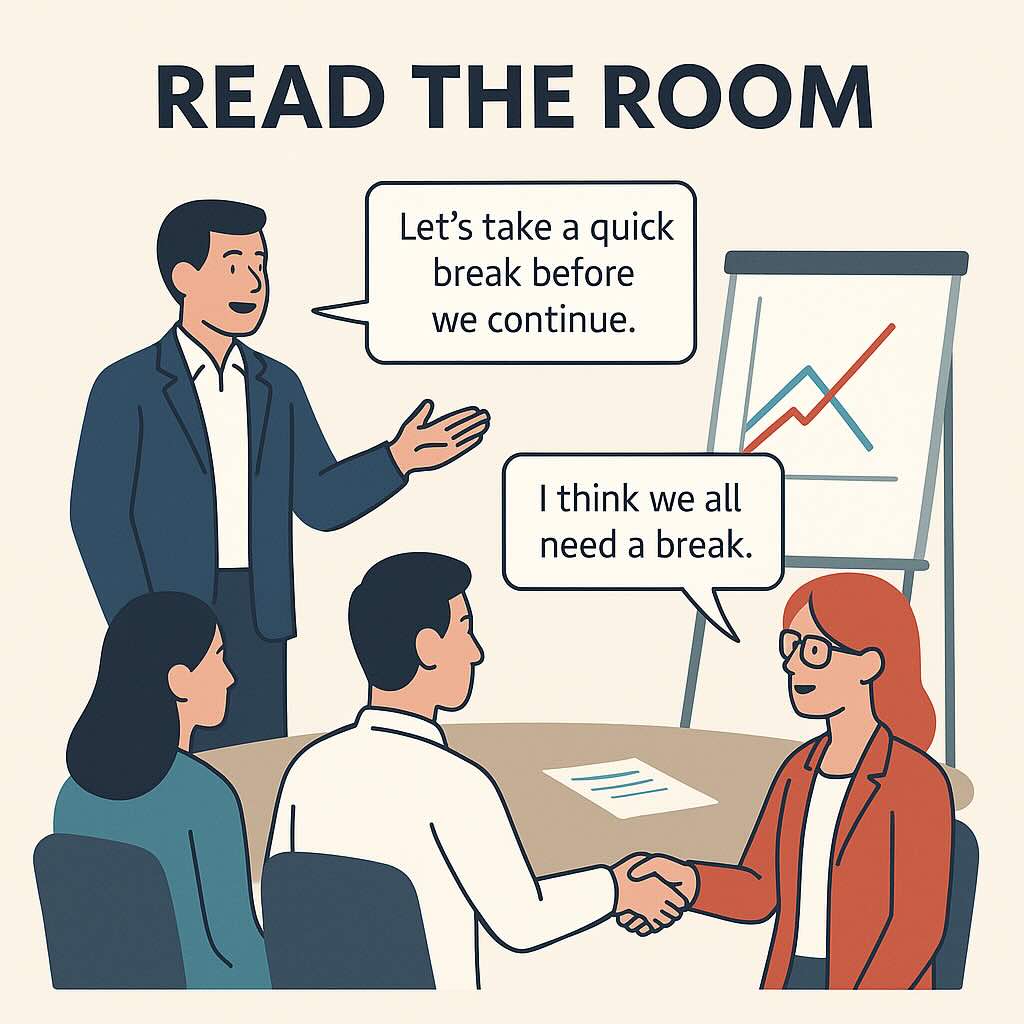
  • Read the Room


    Read the Room Meaning

    ๐Ÿ—“๏ธ Idiom: Read the Room (v)


    ๐Ÿ’ฌ Meaning

    • To understand the mood, feelings, or atmosphere of a group of people.
    • To adjust your behavior or message based on how others are reacting.

    ๐Ÿง  Example Sentences

    • Before making that joke, you should have read the room. It clearly didnโ€™t land well.
    • Sheโ€™s excellent at reading the room during meetings and tailoring her message accordingly.
    • If you want to persuade the board, youโ€™ll need to read the room and speak their language.

    ๐Ÿ›๏ธ Origin

    The idiom comes from the idea of โ€œreadingโ€ a situation. In this case, the โ€œroomโ€ means the people present and their emotions. It has been widely used since the late 20th century in business and social settings.


    ๐Ÿ“ Practice Exercises

    1. Fill in the blank:

    He told a joke during the serious discussion, clearly failing to __________.

    Answer

    read the room

    2. Choose the correct meaning of โ€œread the roomโ€:

    A) To prepare the agenda
    B) To interpret the groupโ€™s mood and adjust your behavior
    C) To take notes during a meeting

    Answer

    B) To interpret the groupโ€™s mood and adjust your behavior

    3. Rewrite the sentence using “read the room”:

    โ€œShe understood the serious tone of the meeting and decided to not make a joke.โ€

    Answer

    She read the room and decided to not make a joke.


    โ„น๏ธ Other Useful Pages


    ๐Ÿ“š Learning Resources

    ๐Ÿ‘‰ Main Idioms Page
    ๐Ÿ‘‰ Idioms for Communication

    ๐Ÿ‘ฅ Support Spaces

    ๐Ÿ‘‰ Student Space
    ๐Ÿ‘‰ Tutor Toolkit

    โญ๏ธ Extras

    ๐Ÿ“ซ Get a Daily Idiom
    ๐Ÿš€ Build a Business with AI


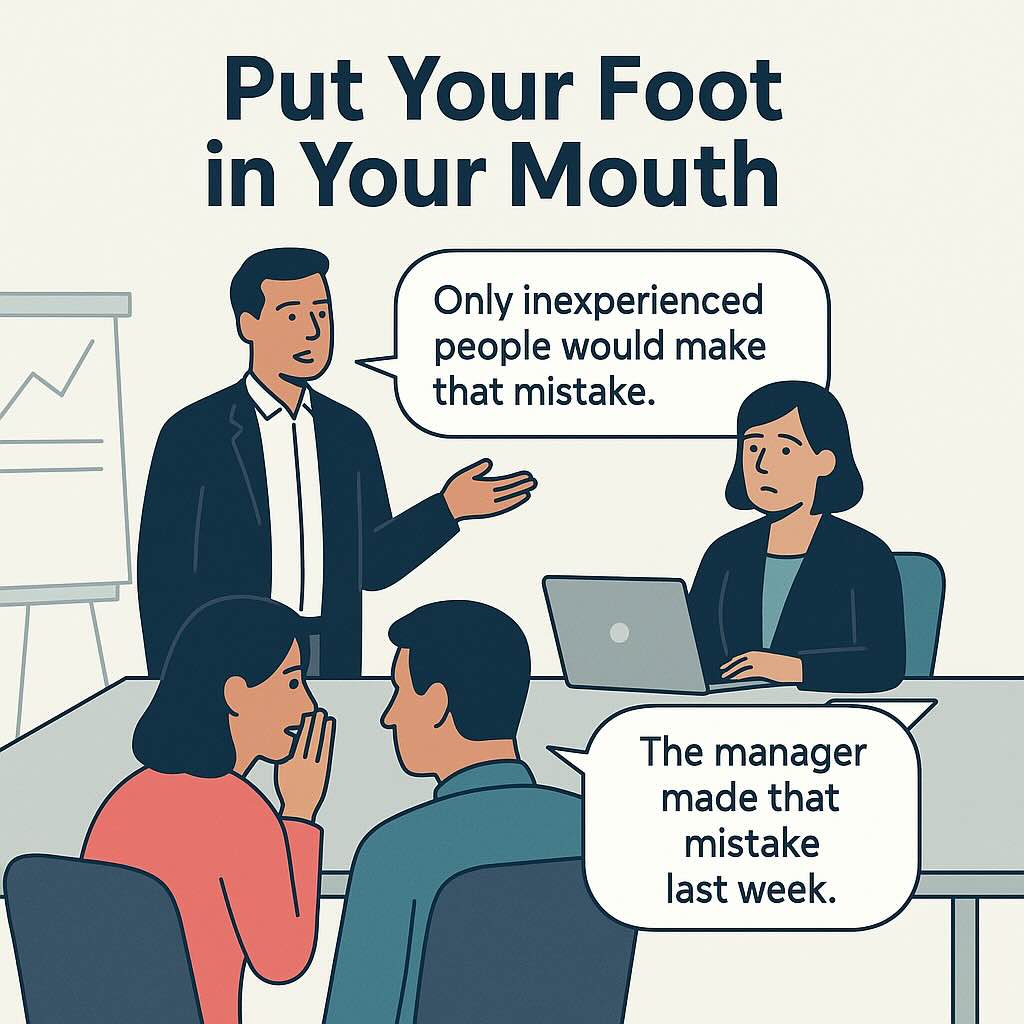
  • Put Your Foot in Your Mouth


    Put your foot in your mouth meaning

    ๐Ÿ—“๏ธ Idiom: Put Your Foot in Your Mouth (verb phrase)


    ๐Ÿ’ฌ Meaning

    • To say something embarrassing or inappropriate.
    • To make a comment that causes awkwardness or offense.

    ๐Ÿง  Example Sentences

    • He really put his foot in his mouth when he mentioned the surprise party.
    • She put her foot in her mouth during the meeting and upset the client.
    • I put my foot in my mouth by asking about her private matters.

    ๐Ÿ›๏ธ Origin

    The phrase dates back to the early 20th century and comes from the idea of doing something clumsy or awkward, like physically putting a foot in your mouth. It evolved to describe saying something embarrassing or inappropriate.


    ๐Ÿ“ Practice Exercises

    1. Fill in the blank:
    “During the presentation, he accidentally __________ his foot in his mouth.”

    Answer

    put

    2. Multiple choice:
    What does “put your foot in your mouth” mean?
    a) To trip while walking
    b) To say something embarrassing or inappropriate
    c) To speak very politely

    Answer

    b) To say something embarrassing or inappropriate

    3. Change the sentence using โ€œput your foot in your mouthโ€:
    She accidentally said something that embarrassed everyone at the party.

    Answer

    She put her foot in her mouth at the party.


    โ„น๏ธ Other Useful Pages


    ๐Ÿ“š Learning Resources

    ๐Ÿ‘‰ Main Idioms Page
    ๐Ÿ‘‰ Idioms for Communication

    ๐Ÿ‘ฅ Support Spaces

    ๐Ÿ‘‰ Student Space
    ๐Ÿ‘‰ Tutor Toolkit

    โญ๏ธ Extras

    ๐Ÿ“ซ Get a Daily Idiom
    ๐Ÿš€ Build a Business with AI


  • Talk at Cross Purposes


    Talk at Cross Purpose Meaning

    ๐Ÿ—“๏ธ Idiom: Talk at Cross Purposes (verb phrase)


    ๐Ÿ’ฌ Meaning

    • To misunderstand each other while talking.
    • To talk about different things without realizing it.

    ๐Ÿง  Example Sentences

    • We were talking at cross purposes and didnโ€™t realize it until later.
    • The manager and the client were talking at cross purposes during the call.
    • Make sure everyone is on the same page, so we donโ€™t talk at cross purposes.

    ๐Ÿ›๏ธ Origin

    The phrase comes from 16th-century English, where โ€œcross purposesโ€ meant opposing intentions. By the 19th century, it was used to describe conversations where people misunderstand each other and talk about different things.


    ๐Ÿ“ Practice Exercises

    1. Fill in the blank:
    “They were __________ at cross purposes and missed the main point.”

    Answer

    talking

    2. Multiple choice:
    What does “talk at cross purposes” mean?
    a) To have a clear, direct conversation
    b) To misunderstand each other while talking
    c) To speak in a foreign language

    Answer

    b) To misunderstand each other while talking

    3. Change the sentence using โ€œtalk at cross purposesโ€:
    During the meeting, they were talking about different subjects without realising it.

    Answer

    During the meeting, they were talking at cross purposes.


    โ„น๏ธ Other Useful Pages


    ๐Ÿ“š Learning Resources

    ๐Ÿ‘‰ Main Idioms Page
    ๐Ÿ‘‰ Idioms for Communication

    ๐Ÿ‘ฅ Support Spaces

    ๐Ÿ‘‰ Student Space
    ๐Ÿ‘‰ Tutor Toolkit

    โญ๏ธ Extras

    ๐Ÿ“ซ Get a Daily Idiom
    ๐Ÿš€ Build a Business with AI