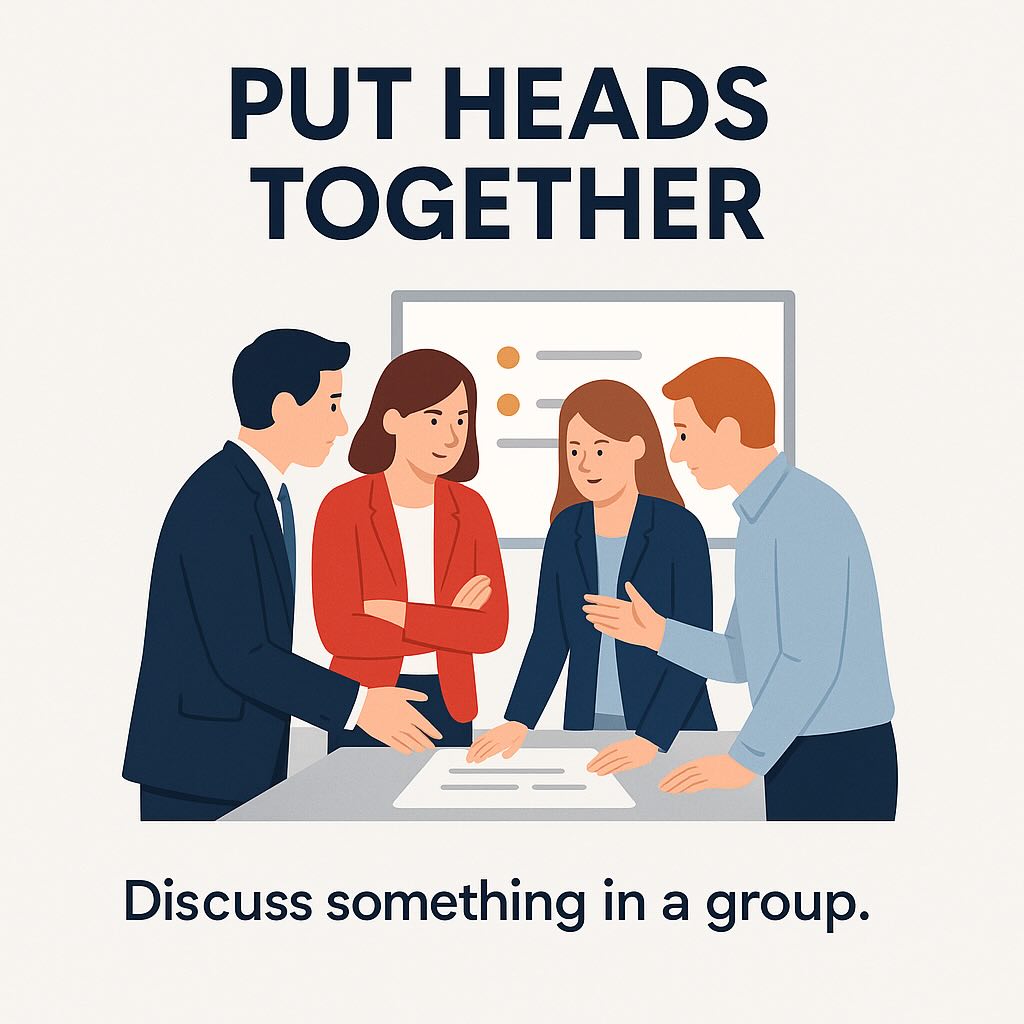
Let’s put our heads together and find a way to fix this issue.
The managers put their heads together to plan the next steps.
We can solve this faster if we put our heads together.
🏛️ Origin
This idiom comes from the image of people leaning their heads close when they talk and think together. It has been used since the 19th century to mean teamwork and joint problem-solving.
📝 Practice Exercises
1. Fill in the blank:
If we __________, we might come up with a better strategy.
Answer
put our heads together
2. Choose the correct meaning of “put our heads together”:
A) To avoid a problem B) To argue with others C) To think and plan together
Answer
C) To think and plan together
3. Rewrite the sentence using “put our heads together”:
“Let’s work together and share ideas to find a solution.”
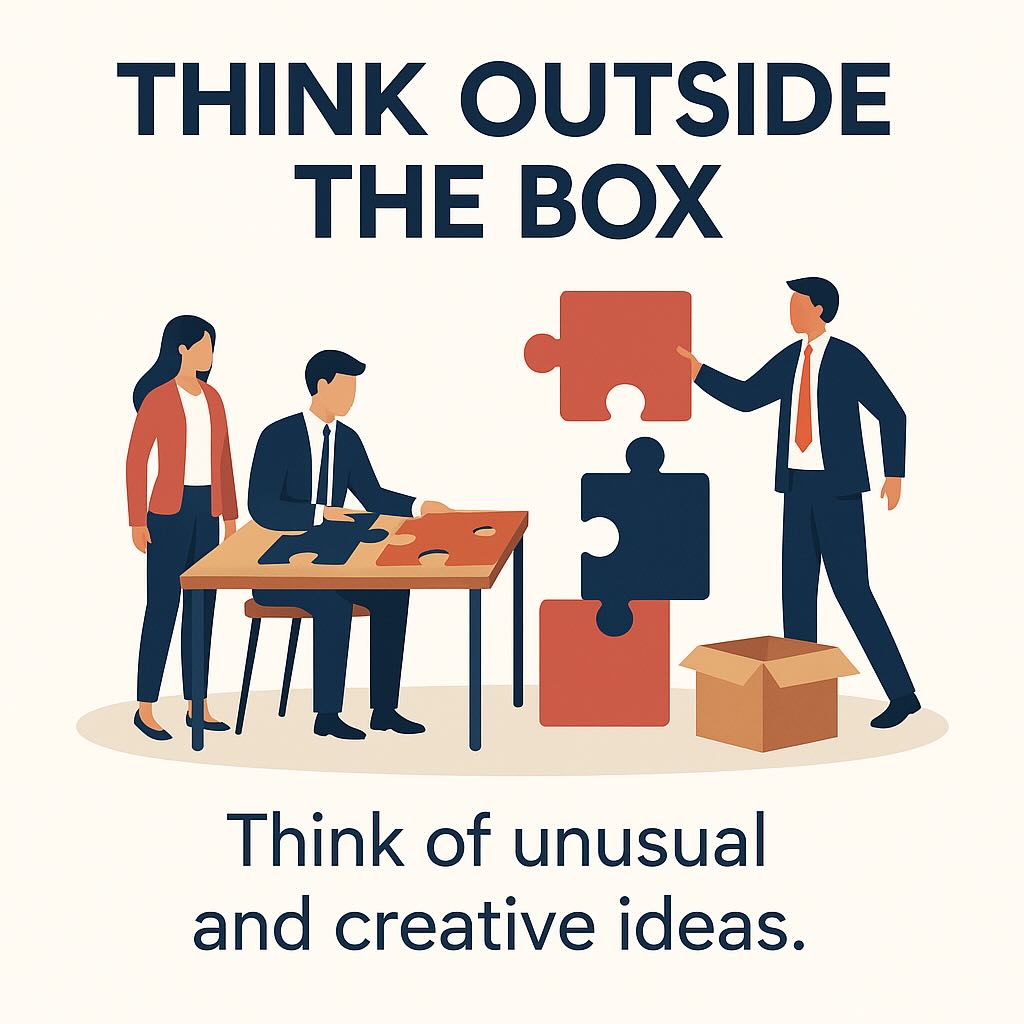
We need to think outside the box to make this product stand out.
She’s great at thinking outside the box when things don’t go as planned.
The manager asked the team to think outside the box during the brainstorming session.
🏛️ Origin
This idiom comes from creative thinking exercises where people are asked to solve a puzzle by drawing lines outside of a set of boxes. It became popular in business to encourage innovation and new ways of thinking.
📝 Practice Exercises
1. Fill in the blank:
To solve this problem, we’ll need to __________.
Answer
think outside the box
2. Choose the correct meaning of “think outside the box”:
A) Use a standard process B) Follow the rules carefully C) Be creative and try something new
Answer
C) Be creative and try something new
3. Rewrite the sentence using “Think Outside The Box”:
“She always finds new and creative ways to solve problems.”
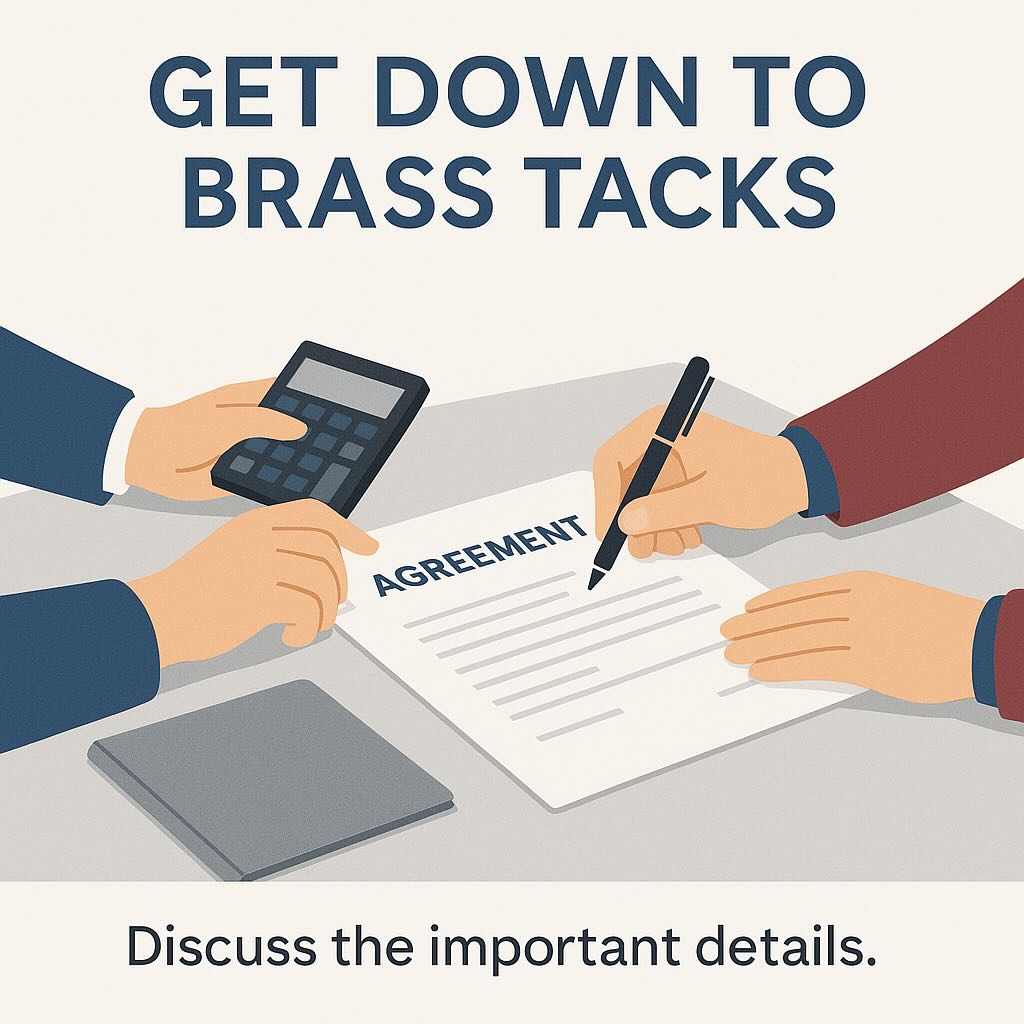
To start discussing the most important or basic facts.
To focus on the main details and not waste time.
🧠 Example Sentences
Let’s get down to brass tacks and talk about the budget.
After some small talk, they got down to brass tacks and negotiated the deal.
We need to stop talking around the problem and get down to brass tacks.
🏛️ Origin
This idiom likely comes from 1800s America. In stores that sold fabric, people used brass tacks on the counter to measure cloth. “Getting down to brass tacks” meant getting to the real measurement — or the most important part.
📝 Practice Exercises
1. Fill in the blank:
We’ve talked enough now. It’s time to __________ and make a decision.
Answer
get down to brass tacks
2. Choose the correct meaning of “get down to brass tacks”:
A) To avoid details B) To focus on the main details C) To decorate a report
Answer
B) To focus on the main details
3. Rewrite the sentence using Get down to Brass tacks”:
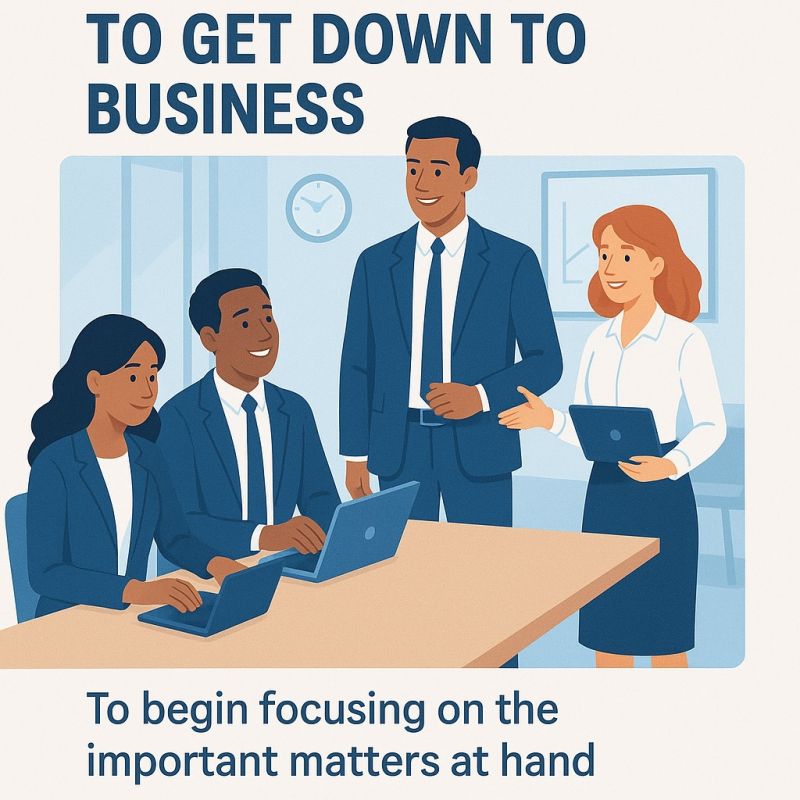
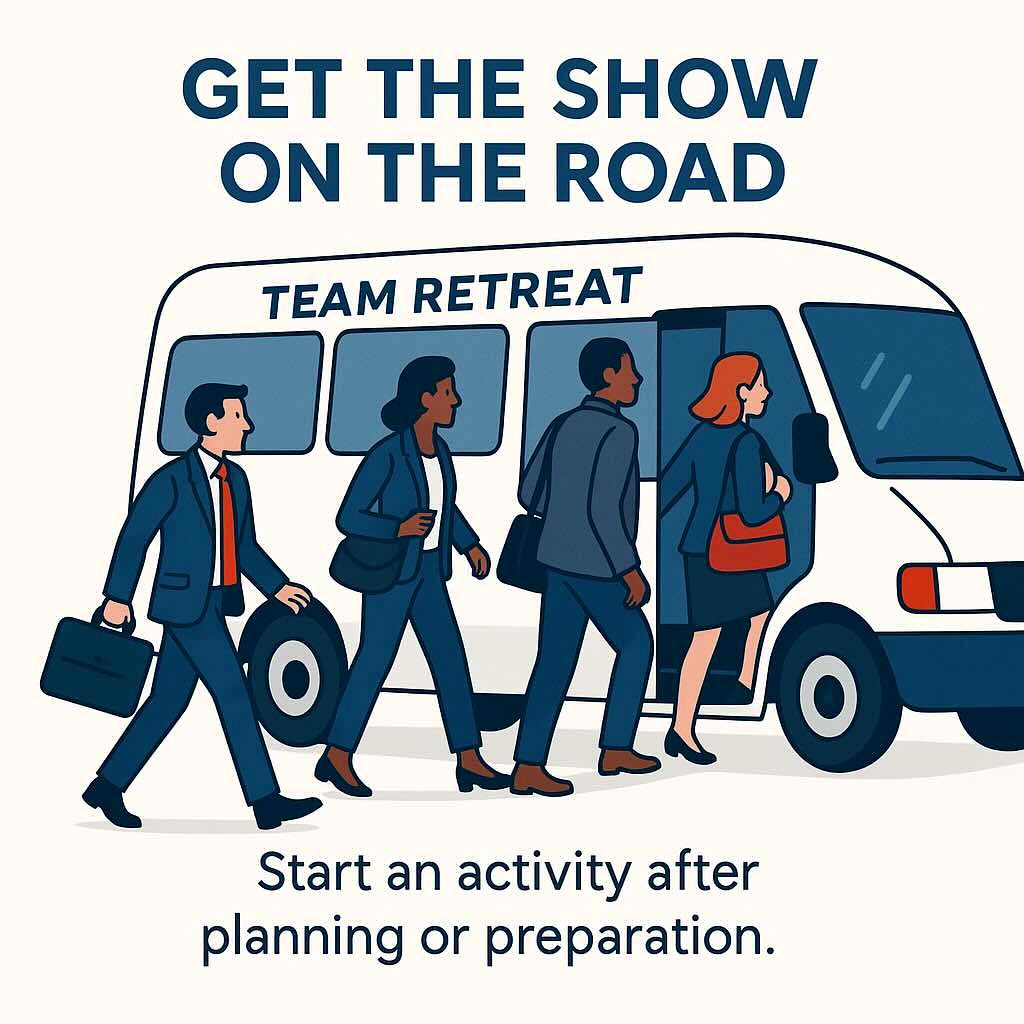
To start something officially or finally move forward.
🧠 Example Sentences
We’ve done all the planning—let’s get the show on the road!
The manager asked if we were ready to get the show on the road.
After weeks of delay, it’s time to get the show on the road.
🏛️ Origin
This idiom originally referred to travelling performers who needed to pack up and move to a new town to perform. Today, it means starting a project or event after everything is prepared.
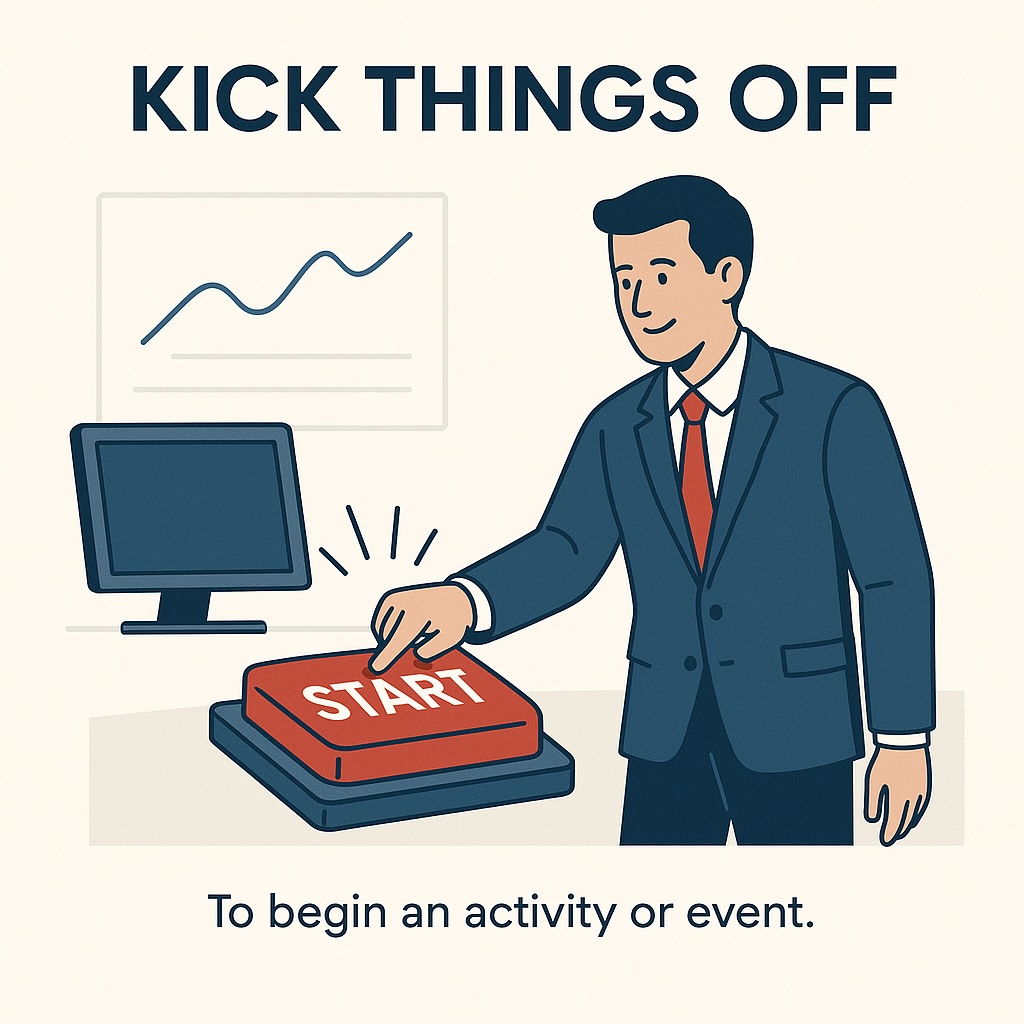
Let’s kick things off with a quick review of last week’s meeting.
The manager kicked things off by welcoming the new team members.
They kicked off the project with a team lunch and planning session.
🏛️ Origin
This idiom comes from sports, especially football (soccer or American football), where the game starts with a “kick-off.” In business, it now means to begin any activity or event.
📝 Practice Exercises
1. Fill in the blank:
Let’s __________ with the sales results from last quarter.
Answer
kick things off
2. Choose the correct meaning of “kick things off”:
A) To stop something B) To delay a decision C) To start an activity or meeting
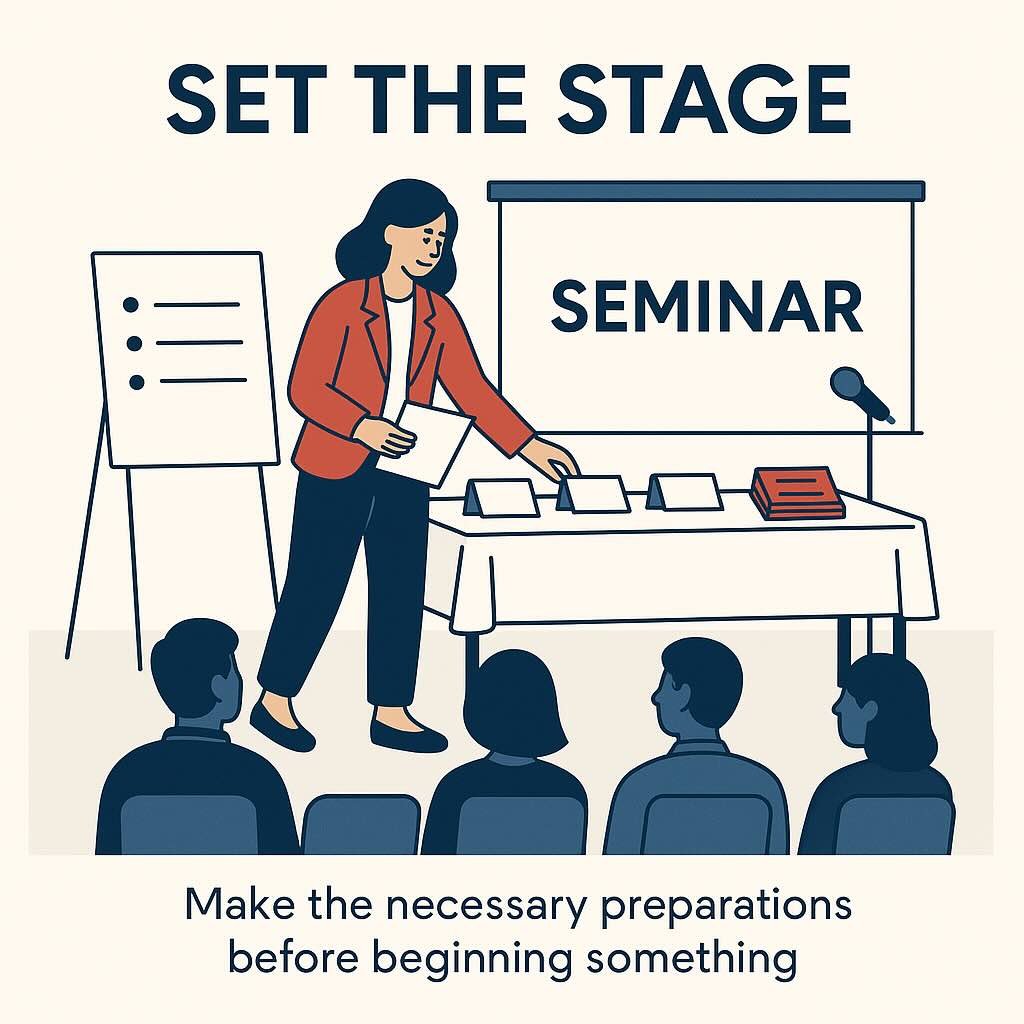
To prepare everything needed for something to happen.
To create the right conditions for success or the next step.
🧠 Example Sentences
The opening speech set the stage for a productive meeting.
The report set the stage for the final decision.
She set the stage for the meeting by making sure all the equipment was ready.
🏛️ Origin
This idiom comes from the theatre. Before a play begins, the crew “sets the stage” by arranging lights, props, and scenery. In business, it means getting everything ready before the main event or action begins.
📝 Practice Exercises
1. Fill in the blank:
The introduction helped __________ for a productive discussion.
Answer
set the stage
2. Choose the correct meaning of “set the stage”:
A) To cancel a meeting B) To prepare for something to happen C) To avoid making a decision
Answer
B) To prepare for something to happen
3. Rewrite the sentence using “set the stage”:
“The opening slides created the right mood for the strategy session.”
Answer
The opening slides set the stage for the strategy session.
First impressions matter, especially in a job interview. My Learn English for a Job Interview vocabulary list gives you the correct Business English words and phrases to talk confidently about your experience, skills, and career goals.
You’ll find 60 useful terms and expressions, divided into Beginner, Intermediate, and Advanced levels. Use them to prepare strong answers, describe achievements, and ask smart questions during interviews.
Disagreements happen in every workplace — what matters is how you handle them. My Workplace Conflict and Resolution vocabulary list gives you powerful Business English words and phrases to discuss problems, solutions, and teamwork calmly and professionally.
You’ll find 60 useful terms and expressions, divided into Beginner, Intermediate, and Advanced levels. Use them to talk about negotiation, mediation, compromise, and communication in meetings or HR discussions.
Beginner – Workplace Conflict and Resolution Vocabulary
Word
Meaning
Example Sentence
Fight
To take part in a violent struggle involving physical force.
They had a fight over the project.
Argue
To give reasons or cite evidence in support of an idea, action, or theory, typically with the aim of persuading others to share one’s view.
They argue about the best approach.
Problem
A matter or situation regarded as unwelcome or harmful and needing to be dealt with and overcome.
We have a problem with the deadline.
Disagree
To have or express a different opinion.
We disagree on the solution.
Talk
To communicate or exchange ideas by spoken words.
Let’s talk about the issue.
Listen
To give one’s attention to a sound.
Please listen to each other.
Stop
To bring or come to an end.
We need to stop the argument.
Share
To have or use something at the same time as someone else.
Let’s share our ideas.
Fair
In accordance with the rules or standards; just or unbiased.
We need a fair solution.
Help
To give assistance or support to.
Let’s help each other.
workplace conflict and resolution vocabulary
Intermediate Workplace Conflict and Resolution Vocabulary
Word
Meaning
Example Sentence
Dispute
A disagreement, argument, or debate.
There is a dispute between the teams.
Conflict
A serious disagreement or argument.
The conflict needs to be resolved.
Negotiate
To obtain or bring about by discussion.
They need to negotiate a compromise.
Mediate
To intervene between people in a dispute in order to bring about an agreement or reconciliation.
We will mediate the discussion.
Compromise
An agreement or a settlement of a dispute that is reached by each side making concessions.
We need to find a compromise.
Tension
Mental or emotional strain.
There is a lot of tension in the office.
Resolve
To settle or find a solution to (a problem, dispute, or contentious matter).
We need to resolve the issue quickly.
Agreement
An arrangement, a promise, or a contract made with somebody.
We reached an agreement.
Misunderstanding
A failure to understand something correctly.
There was a misunderstanding between them.
Discuss
To talk about (something) with another person or group of people.
Let’s discuss the problem in detail.
workplace conflict and resolution vocabulary
Advanced Workplace Conflict and Resolution Vocabulary
Word/Phrase
Meaning
Example Sentence
Arbitration
The use of an arbitrator to settle a dispute.
They agreed to arbitration to resolve the issue.
Conciliation
The action of stopping someone from being angry; placation.
Conciliation was necessary to mend the relationship.
Escalation
An increase in the intensity or seriousness of something; an intensification.
We need to prevent the escalation of the conflict.
De-escalate
To reduce the intensity of (a conflict or situation).
We need to de-escalate the situation immediately.
Impasse
A situation in which no progress is possible, especially because of disagreement; a deadlock.
The negotiation reached an impasse.
Grievance
A real or imagined wrong or other cause for complaint or protest.
He filed a grievance against his manager.
Reconciliation
The restoration of friendly relations.
Reconciliation is the goal of our meeting.
Stakeholder
A person with an interest or concern in something, especially a business.
We need to consider all stakeholder interests.
Mediation Process
A structured, interactive process where an impartial third party assists disputing parties in resolving conflict through specialized communication and negotiation techniques.2
The mediation process was long, but effective.
Constructive Dialogue
A conversation aimed at finding a solution or reaching an understanding.
We need to have a constructive dialogue to move forward.
Great customer service is built on clear, polite, and professional communication. This Customer Service Vocabulary List gives you excellent Business English words and phrases to handle questions, feedback, and complaints effectively.
You’ll find 30 practical terms and expressions, divided into Beginner, Intermediate, and Advanced levels. Use them to discuss customer satisfaction, product support, and service quality in calls, emails, or meetings.
Contains information related to marketing campaigns of the user. These are shared with Google AdWords / Google Ads when the Google Ads and Google Analytics accounts are linked together.
90 days
__utma
ID used to identify users and sessions
2 years after last activity
__utmt
Used to monitor number of Google Analytics server requests
10 minutes
__utmb
Used to distinguish new sessions and visits. This cookie is set when the GA.js javascript library is loaded and there is no existing __utmb cookie. The cookie is updated every time data is sent to the Google Analytics server.
30 minutes after last activity
__utmc
Used only with old Urchin versions of Google Analytics and not with GA.js. Was used to distinguish between new sessions and visits at the end of a session.
End of session (browser)
__utmz
Contains information about the traffic source or campaign that directed user to the website. The cookie is set when the GA.js javascript is loaded and updated when data is sent to the Google Anaytics server
6 months after last activity
__utmv
Contains custom information set by the web developer via the _setCustomVar method in Google Analytics. This cookie is updated every time new data is sent to the Google Analytics server.
2 years after last activity
__utmx
Used to determine whether a user is included in an A / B or Multivariate test.
18 months
_ga
ID used to identify users
2 years
_gali
Used by Google Analytics to determine which links on a page are being clicked
30 seconds
_ga_
ID used to identify users
2 years
_gid
ID used to identify users for 24 hours after last activity
24 hours
_gat
Used to monitor number of Google Analytics server requests when using Google Tag Manager