Category: business english idioms

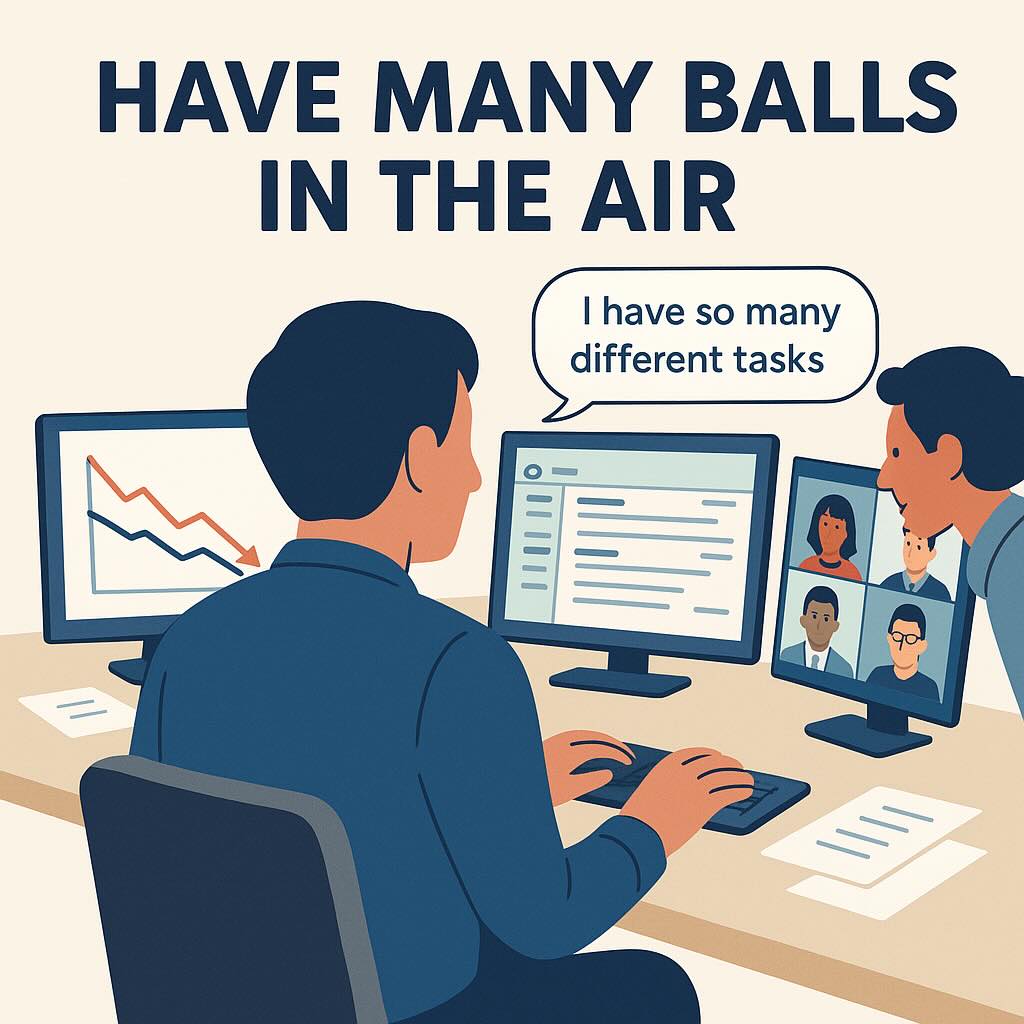
  • Have Many Balls in the Air


    Have many Balls in the Air meaning

    🗓️ Idiom: Have Many Balls in the Air (verb)


    💬 Meaning

    • To manage many tasks or responsibilities at the same time.
    • To juggle several projects or activities at once.

    🧠 Example Sentences

    • As a manager, she always has many balls in the air, from budgets to staff training.
    • He had many balls in the air during the product launch.
    • Our department has many balls in the air as we prepare for the annual report.

    🏛️ Origin

    This idiom comes from juggling. A juggler keeps several balls in the air without dropping them, just like someone handling many tasks at the same time.


    📝 Practice Exercises

    1. Fill in the blank:
    During the busy season, the HR manager had __________ with hiring, training, and payroll all happening at once.

    Answer

    many balls in the air

    2. Multiple choice:
    What does have many balls in the air mean?
    a) To play a sport
    b) To manage many tasks at the same time
    c) To drop responsibilities

    Answer

    b) To manage many tasks at the same time

    3. Change the sentence using “have many balls in the air”:
    She is handling several important projects at once.

    Answer

    She has many balls in the air.


    ℹ️ Other Useful Pages


    📚 Learning Resources

    👉 Management & Leadership Idioms
    👉 Business English Idioms List

    👥 Support Spaces

    👉 Student Space
    👉 Tutor Toolkit

    ⭐️ Extras

    📫 Get a Daily Idiom
    🚀 Build a Business with AI


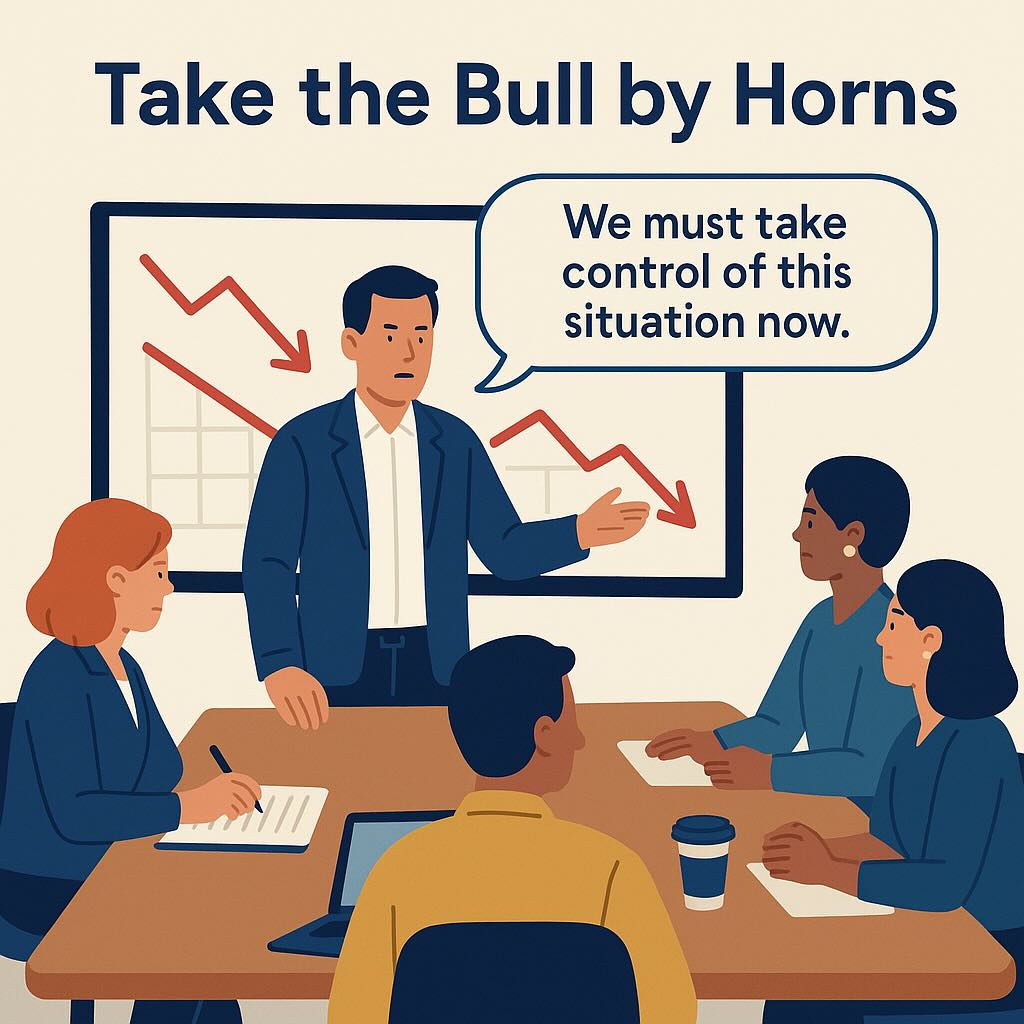
  • Take the Bull by the Horns


    Take the Bull by the Horns Meaning

    🗓️ Idiom: Take the Bull by the Horns (verb)


    💬 Meaning

    • To deal with a difficult situation directly and confidently.
    • To take control and act decisively.

    🧠 Example Sentences

    • The project was behind schedule, so she took the bull by the horns and reorganized the team.
    • He took the bull by the horns and addressed the conflict head-on.
    • To save the company, the CEO took the bull by the horns and made some tough decisions.

    🏛️ Origin

    This idiom comes from bullfighting. Taking the bull by the horns is extremely brave and dangerous, so it became a metaphor for tackling a difficult problem directly.


    📝 Practice Exercises

    1. Fill in the blank:
    The manager decided to __________ and handle the complaints personally.

    Answer

    take the bull by the horns

    2. Multiple choice:
    What does “take the bull by the horns” mean?
    a) To fight an animal
    b) To face a problem directly and decisively
    c) To avoid a difficult situation

    Answer

    b) To face a problem directly and decisively

    3. Change the sentence using “take the bull by the horns”:
    She went straight to the problem area and solved a major issue.

    Answer

    She took the bull by the horns and solved a major issue.


    ℹ️ Other Useful Pages


    📚 Learning Resources

    👉 Management & Leadership Idioms
    👉 Business English Idioms List

    👥 Support Spaces

    👉 Student Space
    👉 Tutor Toolkit

    ⭐️ Extras

    📫 Get a Daily Idiom
    🚀 Build a Business with AI


  • In the Driver’s Seat


    in the driver's seat meaning

    🗓️ Idiom: In the Driver’s Seat (idiom)


    💬 Meaning

    • To be in control of a situation.
    • To have the power to make decisions.

    🧠 Example Sentences

    • After the merger, the new CEO was in the driver’s seat.
    • The investor is in the driver’s seat when deciding which projects get funding.
    • With our strong sales numbers, we are in the driver’s seat for negotiating better contracts.

    🏛️ Origin

    This idiom comes from the image of a driver controlling a car. The person in the driver’s seat chooses where to go, just like a leader controls the direction of a project or company.


    📝 Practice Exercises

    1. Fill in the blank:
    After the successful product launch, the company was __________ when talking to suppliers.

    Answer

    in the driver’s seat

    2. Multiple choice:
    What does in the driver’s seat mean?
    a) To travel in a car
    b) To be in control of a situation
    c) To give advice to a leader

    Answer

    b) To be in control of a situation

    3. Change the sentence using “in the driver’s seat”:
    The manager has full control of the project.

    Answer

    The manager is in the driver’s seat for the project.


    ℹ️ Other Useful Pages


    📚 Learning Resources

    👉 Management & Leadership Idioms
    👉 Business English Idioms List

    👥 Support Spaces

    👉 Student Space
    👉 Tutor Toolkit

    ⭐️ Extras

    📫 Get a Daily Idiom
    🚀 Build a Business with AI


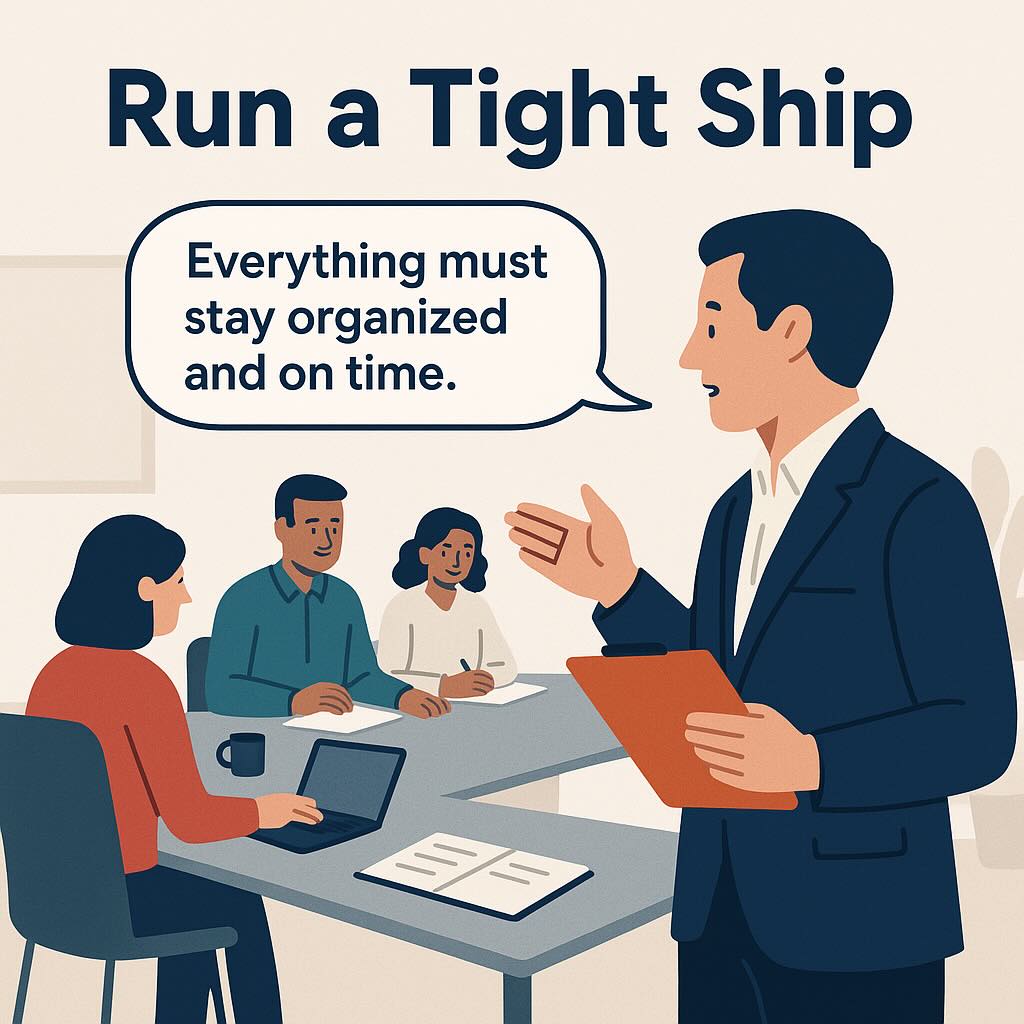
  • Run a Tight Ship


    Run a tight ship meaning

    🗓️ Idiom: Run a Tight Ship (verb)


    💬 Meaning

    • To manage a team, project, or business with strict rules and discipline.
    • To make sure everything is organized and efficient.

    🧠 Example Sentences

    • The project manager runs a tight ship, so deadlines are always met.
    • In our office, the supervisor runs a tight ship, and everyone knows their role.
    • To succeed during the merger, the CEO had to run a tight ship and cut out waste.

    🏛️ Origin

    This idiom comes from the navy, where a “tight ship” meant a vessel with no leaks and a disciplined crew. Over time, it came to mean any organization that is managed with strong control and efficiency.


    📝 Practice Exercises

    1. Fill in the blank:
    The new department head is known to __________, making sure everyone follows the rules.

    Answer

    run a tight ship

    2. Multiple choice:
    What does “run a tight ship” mean?
    a) To relax workplace rules
    b) To manage with discipline and order
    c) To start a new company

    Answer

    b) To manage with discipline and order

    3. Change the sentence using “run a tight ship”:
    “The manager is very strict and makes sure the office is well organized.”

    Answer

    The manager runs a tight ship.


    ℹ️ Other Useful Pages


    📚 Learning Resources

    👉 Main Idioms Page
    👉 Management & Leadership Idioms

    👥 Support Spaces

    👉 Student Space
    👉 Tutor Toolkit

    ⭐️ Extras

    📫 Get a Daily Idiom
    🚀 Build a Business with AI


  • Keep the Ship Afloat


    Keep the Ship Afloat Meaning

    🗓️ Idiom: Keep the Ship Afloat (verb)


    💬 Meaning

    • To keep a project, business, or team running despite problems.
    • To prevent failure or collapse.

    🧠 Example Sentences

    • During the crisis, the team worked hard to keep the ship afloat until help arrived.
    • The finance department cut costs to keep the ship afloat during a slow sales season.
    • Strong teamwork kept the ship afloat while the company searched for a new CEO.

    🏛️ Origin

    This idiom comes from sailing. A ship that takes on too much water will sink, so sailors had to work together to keep it afloat. Over time, the phrase was adopted in business and teamwork to describe keeping an organization or project going, even under stress.


    📝 Practice Exercises

    1. Fill in the blank:
    The new manager introduced strict cost controls to __________ during the economic downturn.

    Answer

    keep the ship afloat

    2. Multiple choice:
    What does “keep the ship afloat” mean?
    a) To plan a new project
    b) To stop something from failing
    c) To expand into new markets

    Answer

    b) To stop something from failing

    3. Change the sentence using “keep the ship afloat”:
    The team made sure the company didn’t collapse during the crisis.

    Answer

    The team worked hard to keep the ship afloat during the crisis.


    ℹ️ Other Useful Pages


    📚 Learning Resources

    👉 Management & Leadership Idioms
    👉 Main Business Idioms List

    👥 Support Spaces

    👉 Student Space
    👉 Tutor Toolkit

    ⭐️ Extras

    📫 Get a Daily Idiom
    🚀 Build a Business with AI


  • Steer the Ship


    Steer the Ship Meaning

    🗓️ Idiom: Steer the Ship (verb)


    💬 Meaning

    • To guide or manage an organization, project, or team.
    • To take responsibility for leading a group in the right direction.

    🧠 Example Sentences

    • The new CEO is ready to steer the ship toward growth and innovation.
    • During the crisis, she steered the ship with calm leadership.
    • A good manager knows how to steer the ship through difficult times.

    🏛️ Origin

    This idiom comes from sailing. To steer a ship means to control its direction. Over time, it became a metaphor for guiding a group, organization, or project.


    📝 Practice Exercises

    1. Fill in the blank:
    “The chairman will ________ the ship during this period of change.”

    Answer

    steer

    2. Multiple choice:
    What does “steer the ship” mean?
    a) To drive a boat
    b) To guide or manage a team or organization
    c) To repair a broken ship

    Answer

    b) To guide or manage a team or organization

    3. Change the sentence using steer the ship:
    He guided the company through difficult financial times.

    Answer

    He steered the ship through difficult financial times.


    ℹ️ Other Useful Pages


    📚 Learning Resources

    👉 Main Idioms Page
    👉 Management & Leadership Idioms

    👥 Support Spaces

    👉 Student Space
    👉 Tutor Toolkit

    ⭐️ Extras

    📫 Get a Daily Idiom
    🚀 Build a Business with AI


  • Lead by Example


    Lead By Example meaning

    🗓️ Idiom: Lead by Example (verb)


    💬 Meaning

    • To show others how to behave by doing the right thing yourself.
    • To guide a team through your own actions, not just words.

    🧠 Example Sentences

    • The new manager decided to lead by example by arriving early and working hard.
    • Good leaders lead by example instead of only giving orders.
    • She led by example during the project, and the team respected her more.

    🏛️ Origin

    The phrase comes from the idea that true leadership is about action. Instead of telling people what to do, a leader should demonstrate it. It has been used in military and business contexts since at least the 19th century.


    📝 Practice Exercises

    1. Fill in the blank:
    A strong leader should always ________ by example to inspire the team.

    Answer

    lead

    2. Multiple choice:
    What does “lead by example” mean?
    a) To make rules for others but not follow them
    b) To show the right behavior through your own actions
    c) To ignore how others behave

    Answer

    b) To show the right behavior through your own actions

    3. Change the sentence using “lead by example”:
    “She wanted her team to respect her, so she worked hard and was fair to everyone.”

    Answer

    She wanted her team to respect her, so she led by example.


    ℹ️ Other Useful Pages


    📚 Learning Resources

    👉 Management and Leadership Idioms
    👉 Business English Idioms List

    👥 Support Spaces

    👉 Student Space
    👉 Tutor Toolkit

    ⭐️ Extras

    📫 Get a Daily Idiom
    🚀 Build a Business with AI

  • Call the Shots


    Call the Shots meaning

    🗓️ Idiom: Call the Shots (verb)


    💬 Meaning

    • Make the important decisions.
    • To be in control of a situation.

    🧠 Example Sentences

    • In this company, the CEO calls the shots.
    • During the meeting, it was clear that the project manager was calling the shots.
    • He likes to call the shots whenever he works in a team.

    🏛️ Origin

    This idiom comes from the military in the 19th century, where officers would literally “call the shots” during firing drills. Over time, it became a metaphor for being in charge and making key decisions.


    📝 Practice Exercises

    1. Fill in the blank:
    “In our department, the director usually calls the ________.”

    Answer

    shots

    2. Multiple choice:
    What does “call the shots” mean?
    a) To make the key decisions
    b) To take photographs
    c) To play basketball

    Answer

    a) To make the key decisions

    3. Change the sentence using call the shots:
    She is the one who makes all the important decisions in the office.

    Answer

    She is the one who calls the shots in the office.


    ℹ️ Other Useful Pages


    📚 Learning Resources

    👉 Main Idioms Page
    👉 Management & Leadership Idioms

    👥 Support Spaces

    👉 Student Space
    👉 Tutor Toolkit

    ⭐️ Extras

    📫 Get a Daily Idiom
    🚀 Build a Business with AI


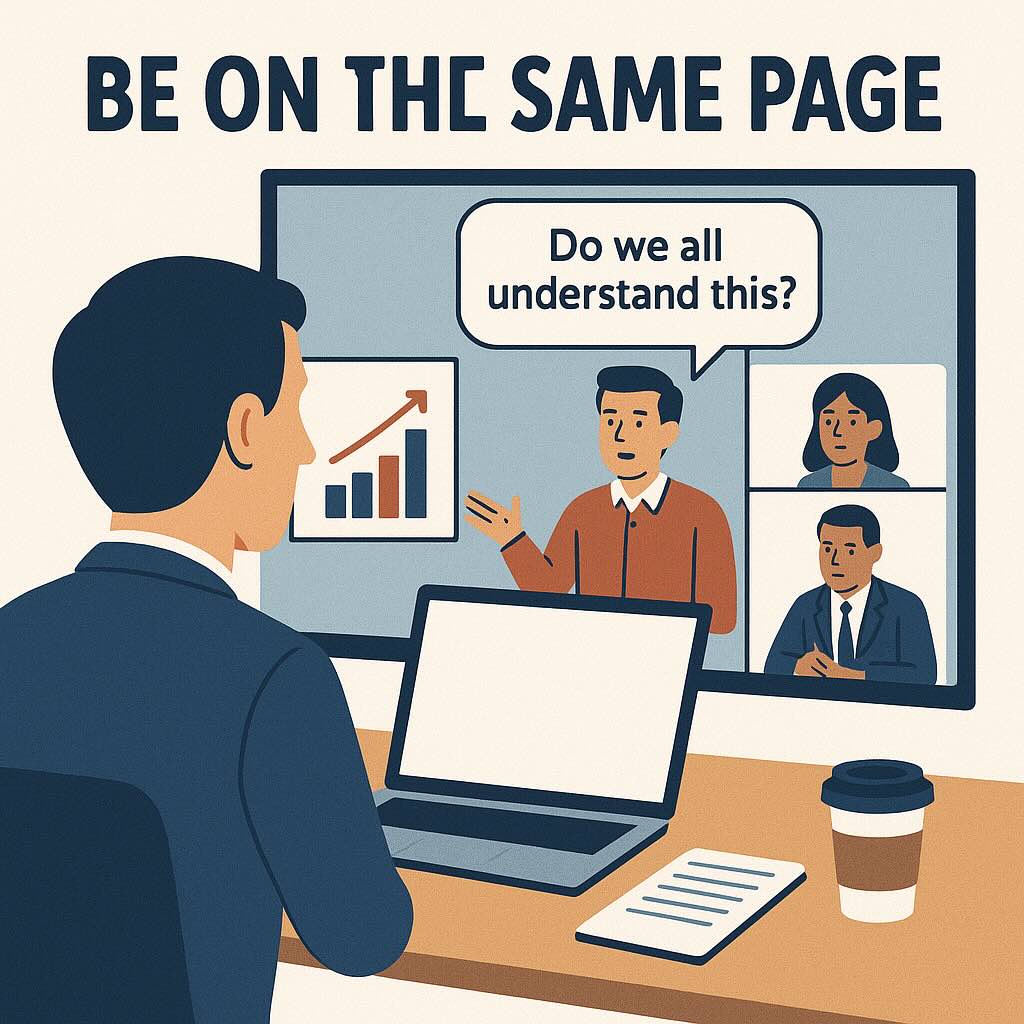
  • Be on the Same Page


    Be on The Same Page Meaning

    🗓️ Idiom: Be on the Same Page (v)


    💬 Meaning

    • To have the same understanding about something.
    • To agree on what needs to be done or discussed.

    🧠 Example Sentences

    • Let’s have a meeting to make sure we are on the same page.
    • The team is on the same page regarding the project goals.
    • It’s important to be on the same page before sending the report to the client.

    🏛️ Origin

    This idiom comes from printing and publishing, where “pages” referred to the physical sheets of text. To be on the same page meant to literally have the same sheet open and later came to mean agreement or shared understanding.


    📝 Practice Exercises

    1. Fill in the blank:
    “Before we proceed, we need to __________ on the same page.”

    Answer

    be

    2. Multiple choice:
    What does “be on the same page” mean?
    a) To physically sit on the same book page
    b) To have the same understanding or agreement
    c) To write on the same page

    Answer

    b) To have the same understanding or agreement

    3. Change the sentence using “be on the same page”:
    We all need to agree on the plan before starting the project.

    Answer

    We all need to be on the same page before starting the project.


    ℹ️ Other Useful Pages


    📚 Learning Resources

    👉 Main Idioms Page
    👉 Idioms for Communication

    👥 Support Spaces

    👉 Student Space
    👉 Tutor Toolkit

    ⭐️ Extras

    📫 Get a Daily Idiom


  • Talk Shop


    Talk shop meaning

    🗓️ Idiom: Talk Shop (v)


    💬 Meaning

    • To discuss work or business matters, especially outside of the workplace.
    • To focus on professional topics rather than casual conversation.

    🧠 Example Sentences

    • They always talk shop during lunch breaks.
    • I don’t want to talk shop at the party; let’s just relax.
    • After the conference, the team stayed behind to talk shop.

    🏛️ Origin

    This idiom comes from the 19th century, where “shop” referred to a workplace or business. Talking about work matters outside of the workplace became known as “talking shop.”


    📝 Practice Exercises

    1. Fill in the blank:
    “They tend to __________ shop even when they meet socially.”

    Answer

    talk

    2. Multiple choice:
    What does “talk shop” mean?
    a) To discuss work or business matters
    b) To go shopping together
    c) To gossip about friends

    Answer

    a) To discuss work or business matters

    3. Change the sentence using “talk shop”:
    They spent the evening discussing work topics instead of socializing.

    Answer

    They spent the evening talking shop instead of socializing.


    ℹ️ Other Useful Pages


    📚 Learning Resources

    👉 Main Idioms Page
    👉 Idioms for Communication

    👥 Support Spaces

    👉 Student Space
    👉 Tutor Toolkit

    ⭐️ Extras

    📫 Get a Daily Idiom