Category: Business Idioms & Phrasal Verbs

  • Sleep On It


    🗓️ Idiom: Sleep On It (verb)


    💬 Meaning

    • To delay making a decision until the next day.
    • To think carefully about something before deciding.

    🧠 Example Sentences

    • I can’t decide right now, I’ll sleep on it and give you an answer tomorrow.
    • She decided to sleep on it before signing the contract.
    • The manager suggested the team sleep on it and meet again in the morning.

    🏛️ Origin

    This idiom comes from the idea that problems or decisions can become clearer after a night’s sleep. It has been used in English since at least the 16th century and became common in business and everyday life to advise taking time to consider decisions carefully.


    📝 Practice Exercises

    1. Fill in the blank:
    I’m not sure about this proposal. I’ll __________ on it and reply tomorrow.

    Answer

    sleep

    2. Multiple choice:
    What does “sleep on it” mean?
    a) To ignore a decision
    b) To postpone a decision and think about it
    c) To make a quick choice

    Answer

    b) To postpone a decision and think about it

    3. Change the sentence using sleep on it:
    He decided to wait until the next day before choosing the best option.

    Answer

    He decided to sleep on it before choosing the best option.


    ℹ️ Other Useful Pages


    📚 Learning Resources

    👉 Negotiation Idioms
    👉 Business English Idioms List

    👥 Support Spaces

    👉 Student Space
    👉 Tutor Toolkit

    ⭐️ Extras

    📫 Get a Daily Idiom
    🚀 Build a Business with AI


  • See Both Sides of the Coin


    🗓️ Idiom: See Both Sides of the Same Coin (verb)


    💬 Meaning

    • To understand two different aspects or points of view of the same situation.
    • To recognize both positive and negative sides of an issue.

    🧠 Example Sentences

    • In negotiations, it’s important to see both sides of the same coin before making a decision.
    • She could see both sides of the same coin and understood why the project faced delays.
    • Managers need to see both sides of the same coin when evaluating employee performance.

    🏛️ Origin

    This idiom comes from the idea of a coin having two sides. The comparison of two sides of a coin has been used in English since at least the 17th century to describe considering multiple perspectives. It became more common in business and everyday discussion to encourage balanced thinking.


    📝 Practice Exercises

    1. Fill in the blank:
    Before deciding, try to __________ both sides of the same coin.

    Answer

    see

    2. Multiple choice:
    What does “see both sides of the same coin” mean?
    a) To look at a coin carefully
    b) To understand two different aspects of a situation
    c) To flip a coin to decide

    Answer

    b) To understand two different aspects of a situation

    3. Change the sentence using see both sides of the same coin:
    He considered both the advantages and disadvantages before making the decision.

    Answer

    He saw both sides of the same coin before making the decision.


    ℹ️ Other Useful Pages


    📚 Learning Resources

    👉 Negotiation Idioms
    👉 Business English Idioms List

    👥 Support Spaces

    👉 Student Space
    👉 Tutor Toolkit

    ⭐️ Extras

    📫 Get a Daily Idiom
    🚀 Build a Business with AI


  • Leave No Stone Unturned


    🗓️ Idiom: Leave No Stone Unturned (verb)


    💬 Meaning

    • To do everything possible to achieve a goal or find something.
    • To make a thorough and careful effort.

    🧠 Example Sentences

    • The team left no stone unturned in preparing for the client presentation.
    • She left no stone unturned when investigating the issue.
    • Management left no stone unturned to secure the new contract.

    🏛️ Origin

    The idiom comes from an ancient story in Greece. A Greek strategist advised a general to turn over every stone to find hidden treasure. This idea of being thorough was passed down over time. The phrase appeared in English in the 17th century and is now used to mean making a complete effort to achieve a goal.


    📝 Practice Exercises

    1. Fill in the blank:
    The detective left no stone __________ in solving the case.

    Answer

    unturned

    2. Multiple choice:
    What does “leave no stone unturned” mean?
    a) To give up quickly
    b) To make a thorough effort
    c) To ignore minor details

    Answer

    b) To make a thorough effort

    3. Change the sentence using leave no stone unturned:
    The team did everything possible to prepare for the audit.

    Answer

    The team left no stone unturned to prepare for the audit.


    ℹ️ Other Useful Pages


    📚 Learning Resources

    👉 Negotiation Idioms
    👉 Business English Idioms List

    👥 Support Spaces

    👉 Student Space
    👉 Tutor Toolkit

    ⭐️ Extras

    📫 Get a Daily Idiom
    🚀 Build a Business with AI


  • Talk Something Over


    🗓️ Idiom: Talk Something Over (verb)


    💬 Meaning

    • To discuss something carefully before making a decision.
    • To consider options or ideas by talking with others.

    🧠 Example Sentences

    • The team talked the proposal over before giving their answer.
    • She talked the plan over with her manager to get feedback.
    • They talked over the contract terms before signing.

    🏛️ Origin

    This idiom comes from everyday English, using “talk over” to mean discuss. It has been in use since the 19th century and became common in business and negotiation contexts to describe careful discussion before making a choice.


    📝 Practice Exercises

    1. Fill in the blank:
    Before making a final decision, the partners decided to __________ the deal over.

    Answer

    talk

    2. Multiple choice:
    What does “talk something over” mean?
    a) To ignore something
    b) To discuss something carefully
    c) To decide alone without consulting others

    Answer

    b) To discuss something carefully

    3. Change the sentence using talk something over:
    They discussed the project with their team before moving forward.

    Answer

    They talked the project over with their team before moving forward.


    ℹ️ Other Useful Pages


    📚 Learning Resources

    👉 Negotiation Idioms
    👉 Business English Idioms List

    👥 Support Spaces

    👉 Student Space
    👉 Tutor Toolkit

    ⭐️ Extras

    📫 Get a Daily Idiom
    🚀 Build a Business with AI


  • Talk Someone Out of Something


    🗓️ Idiom: Talk Someone Out of Something (verb)


    💬 Meaning

    • To persuade someone not to do something.
    • To convince someone to avoid a particular action or decision.

    🧠 Example Sentences

    • She talked her friend out of quitting his job.
    • The manager talked the client out of making a hasty decision.
    • He was talked out of investing in the risky project.

    🏛️ Origin

    This idiom comes from ordinary conversational English, using “talk” to mean persuade. It is the opposite of “talk someone into something” and has been used in English since the early 20th century. In business and negotiation, it often refers to convincing someone to reconsider a decision.


    📝 Practice Exercises

    1. Fill in the blank:
    She managed to __________ him out of accepting the risky contract.

    Answer

    talk

    2. Multiple choice:
    What does “talk someone out of something” mean?
    a) To persuade someone not to do something
    b) To force someone to act
    c) To agree with someone’s decision

    Answer

    a) To persuade someone not to do something

    3. Change the sentence using talk someone out of something:
    He convinced his colleague not to join the risky venture.

    Answer

    He talked his colleague out of joining the risky venture.


    ℹ️ Other Useful Pages


    📚 Learning Resources

    👉 Negotiation Idioms
    👉 Business English Idioms List

    👥 Support Spaces

    👉 Student Space
    👉 Tutor Toolkit

    ⭐️ Extras

    📫 Get a Daily Idiom
    🚀 Build a Business with AI


  • Talk Someone Into Something


    🗓️ Idiom: Talk Someone Into Something (verb)


    💬 Meaning

    • To persuade someone to do something when they might be against it initially.
    • To convince someone to agree to an idea or action.

    🧠 Example Sentences

    • She talked her colleague into joining the new project.
    • He was talked into attending the conference even though he was busy.
    • The manager talked the client into signing the contract early.

    🏛️ Origin

    This idiom comes from everyday conversational English, using “talk” to mean persuade or influence. It has been commonly used since the early 20th century and is widely used in business, negotiation, and daily situations to describe convincing someone to act.


    📝 Practice Exercises

    1. Fill in the blank:
    She managed to __________ him into agreeing to the new plan.

    Answer

    talk

    2. Multiple choice:
    What does “talk someone into something” mean?
    a) To force someone physically
    b) To persuade someone to do something
    c) To ignore someone’s opinion

    Answer

    b) To persuade someone to do something

    3. Change the sentence using talk someone into something:
    He convinced his team to accept the new deadline.

    Answer

    He talked his team into accepting the new deadline.


    ℹ️ Other Useful Pages


    📚 Learning Resources

    👉 Negotiation Idioms
    👉 Business English Idioms List

    👥 Support Spaces

    👉 Student Space
    👉 Tutor Toolkit

    ⭐️ Extras

    📫 Get a Daily Idiom
    🚀 Build a Business with AI


  • Bring Something to the Table


    🗓️ Idiom: Bring Something to the Table (verb)


    💬 Meaning

    • To contribute a skill, idea, or resource to a discussion or project.
    • To offer something useful or valuable in a team or negotiation.

    🧠 Example Sentences

    • Every team member should bring something to the table during strategy meetings.
    • She brings years of experience to the table that will help the project succeed.
    • The new partner brought valuable contacts to the table.

    🏛️ Origin

    This idiom comes from the idea of placing something on a table where people are discussing or negotiating. It has been used in business and negotiation contexts since the mid-20th century to describe contributing something useful to a group or discussion.


    📝 Practice Exercises

    1. Fill in the blank:
    In negotiations, it is important to __________ something to the table.

    Answer

    bring

    2. Multiple choice:
    What does “bring something to the table” mean?
    a) To contribute something valuable
    b) To arrive at a meeting
    c) To take items away from a discussion

    Answer

    a) To contribute something valuable

    3. Change the sentence using bring something to the table:
    She offered her expertise to help with the project.

    Answer

    She brought her expertise to the table to help with the project.


    ℹ️ Other Useful Pages


    📚 Learning Resources

    👉 Negotiation Idioms
    👉 Business English Idioms List

    👥 Support Spaces

    👉 Student Space
    👉 Tutor Toolkit

    ⭐️ Extras

    📫 Get a Daily Idiom
    🚀 Build a Business with AI


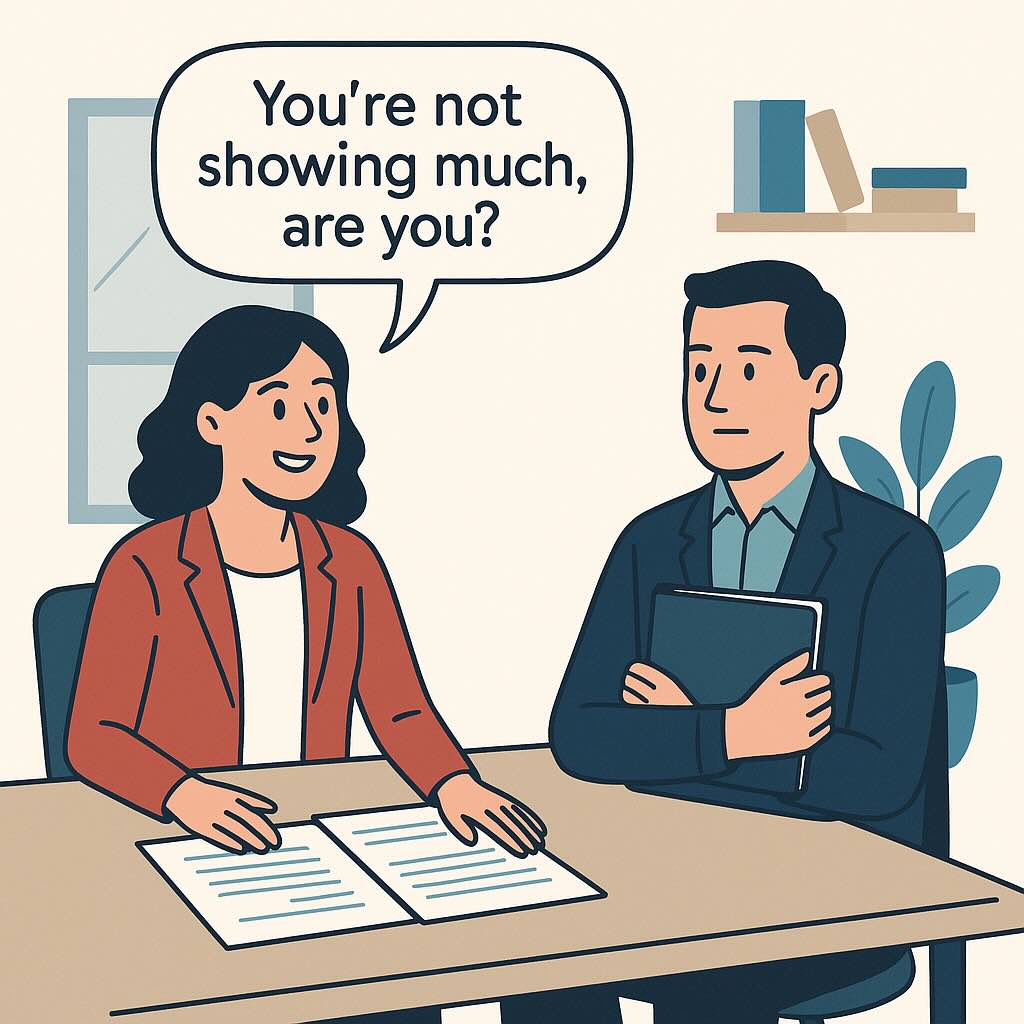
  • Read Between the Lines

    Business English idiom “Read Between the Lines” illustrated with a person noticing hidden meaning in a negotiation or conversation.

    🗓️ Idiom: Read Between the Lines (verb)


    💬 Meaning

    • To understand the hidden meaning or intention behind what is said.
    • To notice information that is not openly stated.

    🧠 Example Sentences

    • She could read between the lines and understood that the deal might fail.
    • Managers often need to read between the lines during performance reviews.
    • He read between the lines of the email and realized the client was unhappy.

    🏛️ Origin

    The phrase comes from the idea of noticing words or messages “between the lines” of text. It emerged in English in the 19th century and became widely used to describe interpreting hidden meanings, especially in letters, reports, or negotiations.


    📝 Practice Exercises

    1. Fill in the blank:
    To understand his real feelings, she had to __________ between the lines.

    Answer

    read

    2. Multiple choice:
    What does “read between the lines” mean?
    a) To literally look at text carefully
    b) To understand hidden meaning
    c) To ignore details in a document

    Answer

    b) To understand hidden meaning

    3. Change the sentence using read between the lines:
    He didn’t say it but but she noticed that he was unhappy with the proposal.

    Answer

    She read between the lines and noticed he was unhappy with the proposal.


    ℹ️ Other Useful Pages


    📚 Learning Resources

    👉 Negotiation Idioms
    👉 Business English Idioms List

    👥 Support Spaces

    👉 Student Space
    👉 Tutor Toolkit

    ⭐️ Extras

    📫 Get a Daily Idiom
    🚀 Build a Business with AI


  • Have an Ace Up Your Sleeve


    Business English idiom “Have an Ace Up Your Sleeve” illustrated with someone holding a secret advantage or hidden plan.

    🗓️ Idiom: Have an Ace Up Your Sleeve (verb)


    💬 Meaning

    • To have a secret advantage or plan that you can use when needed.
    • To keep a hidden resource ready for the right moment.

    🧠 Example Sentences

    • The company had an ace up its sleeve with a new product that surprised competitors.
    • She always has an ace up her sleeve during negotiations.
    • The lawyer revealed his ace up his sleeve at the end of the trial.

    🏛️ Origin

    This phrase comes from card games and gambling. A dishonest player might hide an extra ace up their sleeve to use later. The idiom began appearing in English in the mid-19th century and is now widely used to describe a hidden advantage, not just in games but also in business and daily life.


    📝 Practice Exercises

    1. Fill in the blank:
    The negotiator had an __________ up his sleeve to win the deal.

    Answer

    ace

    2. Multiple choice:
    What does “have an ace up your sleeve” mean?
    a) To keep a secret advantage
    b) To play cards very slowly
    c) To share all your ideas at once

    Answer

    a) To keep a secret advantage

    3. Change the sentence using “have an ace up your sleeve”:
    The company had a hidden plan to surprise competitors.

    Answer

    The company had an ace up its sleeve to surprise competitors.


    ℹ️ Other Useful Pages


    📚 Learning Resources

    👉 Negotiation Idioms
    👉 Business English Idioms List

    👥 Support Spaces

    👉 Student Space
    👉 Tutor Toolkit

    ⭐️ Extras

    📫 Get a Daily Idiom
    🚀 Build a Business with AI


  • Keep Your Cards Close to Your Chest


    Image illustrating the Business English idiom “Keep Your Cards Close to Your Chest,” showing a professional carefully withholding information during a negotiation.

    🗓️ Idiom: Keep Your Cards Close to Your Chest (v)


    💬 Meaning

    • To hide your plans, ideas, or intentions from others.
    • To avoid sharing too much information in a negotiation or discussion.

    🧠 Example Sentences

    • During the merger talks, the CEO kept his cards close to his chest.
    • She always keeps her cards close to her chest when discussing contracts.
    • The company kept its cards close to its chest about the new product launch.

    🏛️ Origin

    This idiom comes from card games, where holding your cards close to your chest prevents others from seeing them. It has been in use since the 19th century and became common in business to describe people who prefer to keep information private until the right moment.


    📝 Practice Exercises

    1. Fill in the blank:
    The lawyer decided to __________ his cards close to his chest during the negotiations.

    Answer

    keep

    2. Multiple choice:
    What does “keep your cards close to your chest” mean?
    a) To share all your plans openly
    b) To hide your intentions
    c) To play a card game carefully

    Answer

    b) To hide your intentions

    3. Change the sentence using “keep your cards close to your chest”:
    The manager did not reveal her real strategy during the meeting.

    Answer

    The manager kept her cards close to her chest during the meeting.


    ℹ️ Other Useful Pages


    📚 Learning Resources

    👉 Negotiation Idioms
    👉 Business English Idioms List

    👥 Support Spaces

    👉 Student Space
    👉 Tutor Toolkit

    ⭐️ Extras

    📫 Get a Daily Idiom
    🚀 Build a Business with AI